

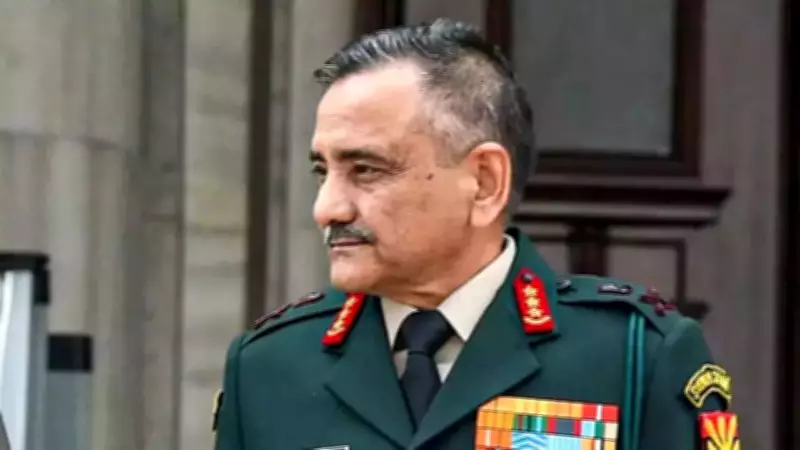
CDS General Anil Chauhan: Nehru Recognized Tibet as Part of China to Build Relations
Chief of Defence Staff General Anil Chauhan on Friday asserted that former Prime Minister Jawaharlal Nehru acknowledged Tibet as a constituent of China with the intention of cultivating a positive relationship between the two nations. While delivering an address at the Bharat Himalayan Strategy Forum in Dehradun, General Chauhan reflected on the historical context leading to the Panchsheel agreement between India and China.
Historical Context and Strategic Decisions
General Chauhan elaborated, "Upon independence, the British departed, and it fell upon India to determine its frontiers. Nehru likely understood that we possessed certain claims, such as the McMahon Line in the east and some assertions in the Ladakh region, but these were not firmly established. Consequently, he pursued the Panchsheel agreement, and similarly for the Chinese, who had recently liberated Tibet and advanced into Lhasa. This particular area was precarious at both extremities."
He further explained, "Thus, they sought stability in this region. Independent India was eager to forge a robust relationship with China. In 1954, India formally recognized Tibet as an integral part of China, culminating in both countries signing the Panchsheel Agreement."

Rethinking the Himalayan Boundary
In his discourse, General Chauhan also emphasized the necessity for India to reassess its perception of the Himalayan boundary, particularly in Uttarakhand's middle sector. "The Himalayas have historically served more as a zone of interaction rather than a border of exclusion. Uttarakhand represents a civilization landscape where the sacred and the strategic have coexisted for centuries," the CDS remarked.
He highlighted the strategic significance of Dehradun as an ideal location for think tanks like BHISM, noting its unique position to develop terrain-conscious, system-oriented, and long-horizon strategic thought.
Implications and Contemporary Relevance
General Chauhan's statements underscore a pivotal moment in India-China relations, shedding light on Nehru's diplomatic approach during the formative years of independent India. The recognition of Tibet as part of China was a strategic move aimed at fostering bilateral stability and cooperation, as encapsulated in the Panchsheel principles of peaceful coexistence.
The call to rethink the Himalayan boundary reflects evolving strategic considerations, emphasizing the region's role as a connective rather than divisive space. This perspective aligns with broader discussions on national security and diplomatic engagements in the context of contemporary geopolitical dynamics.






