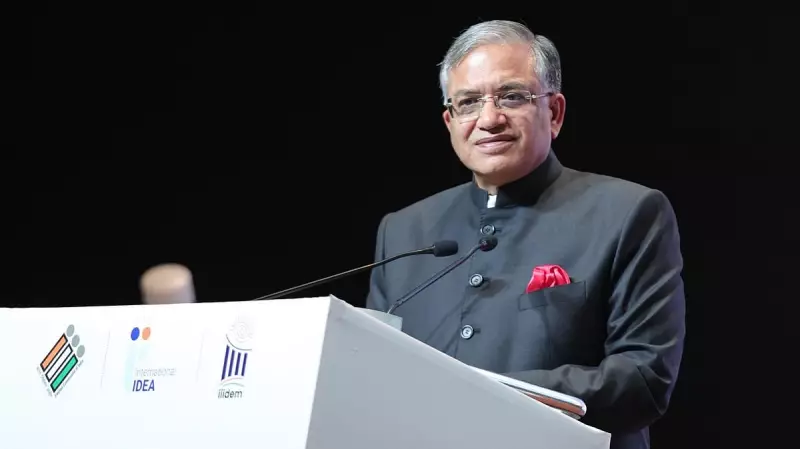
Chief Election Commissioner Gyanesh Kumar has delivered a powerful statement on the foundational importance of electoral integrity in India's democratic framework. Speaking about the mechanisms that sustain democratic processes, Kumar emphasized that a pure and accurate voters' list serves as the bedrock for strengthening democracy across the nation.
The Critical Role of Electoral Roll Accuracy
In his address, CEC Gyanesh Kumar articulated how clean electoral rolls directly impact the fairness and transparency of elections. He explained that when voter lists are meticulously maintained and free from errors or duplications, it ensures that every eligible citizen can exercise their franchise without obstacles. This precision in electoral documentation, according to Kumar, fortifies public trust in democratic institutions and enhances the overall credibility of the electoral process.
Bihar's Successful Revision Exercise: A Case Study
Highlighting a significant achievement, Gyanesh Kumar pointed to the special intensive revision of electoral rolls conducted in Bihar last year. During this comprehensive exercise, which aimed to update and purify the voter list, a remarkable milestone was reached: not a single complaint was filed challenging the inclusion or exclusion of any elector. This zero-complaint outcome underscores the effectiveness of the Election Commission's methodologies and the collaborative efforts of election officials in the state.

The success in Bihar demonstrates how rigorous planning and execution can lead to flawless electoral roll revisions. Kumar noted that such exercises involve extensive verification processes, public awareness campaigns, and opportunities for citizens to raise objections, all contributing to the creation of an unimpeachable voters' list.
Broader Implications for Indian Democracy
Beyond the technical aspects, CEC Gyanesh Kumar connected the purity of voter lists to larger democratic values. He argued that accurate electoral rolls prevent malpractices like impersonation or multiple voting, thereby safeguarding the principle of 'one person, one vote.' This, in turn, ensures that election outcomes truly reflect the will of the people, reinforcing democracy at its core.
Kumar also touched upon the Election Commission's ongoing initiatives to leverage technology for maintaining updated voter databases. These efforts include regular audits, integration with other government databases to remove discrepancies, and public outreach programs to encourage voter registration and verification.
Future Directions and Continued Vigilance
Looking ahead, Gyanesh Kumar stressed the need for continuous vigilance and improvement in electoral roll management. He called for sustained cooperation between election authorities, political parties, and citizens to uphold the sanctity of voter lists. By learning from successes like the Bihar revision, the Election Commission aims to replicate such models across other states, fostering a more robust democratic ecosystem nationwide.
In conclusion, CEC Gyanesh Kumar's remarks serve as a timely reminder of the indispensable link between clean electoral rolls and democratic vitality. As India prepares for future elections, the emphasis on accurate voter lists will remain a top priority, ensuring that democracy not only functions but thrives through transparent and inclusive processes.