

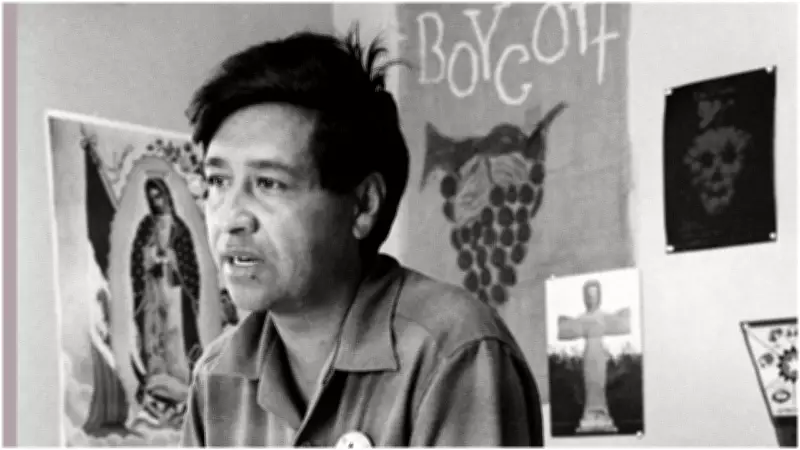
Cesar Chavez's Legacy Rapidly Removed from Public Spaces Following Sexual Assault Allegations
In an unprecedented move, the name and likeness of farmworker rights icon Cesar Chavez have been swiftly erased from buildings, roads, parks, and schools across California. This rapid response came just days after a New York Times investigation brought to light allegations accusing Chavez of sexually assaulting minors and fellow labor leader Dolores Huerta. The Los Angeles Times reported that officials and activists acted with remarkable speed, driven by shock and a sense of urgency to address the serious claims.
Immediate Actions and Community Reactions
Within hours of the allegations surfacing, communities across the state initiated efforts to remove Chavez's presence from public spaces. Many officials emphasized the need for immediate action, stating it sends a clear message that such behavior is unacceptable. On Thursday, Los Angeles Mayor Karen Bass and City Council members announced they would abandon the holiday honoring Chavez's birthday, renaming it "Farm Workers Day" to celebrate the laborers who toil in the fields.
Los Angeles City Councilmember Monica Rodriguez highlighted the community's integrity, saying, "I appreciate that my community has the integrity and the strength to reckon with these new revelations in a very expedient way, and as we do in Los Angeles." The effort to rename the holiday was immediate, reflecting a broader shift toward focusing on the movement rather than any individual.

Impact on Farm Worker Communities
The allegations have sent shockwaves through farm worker communities, where Chavez was long revered for his advocacy. Araceli Molar de Barrios, who worked in the fields for nearly 30 years after arriving in the U.S. in 1995, expressed deep dismay. She noted that the news of Chavez's alleged abuse resonated with her own experiences of sexual harassment in the workplace. "We have to use our voices," she said. "We are no one's sexual object."
Molar de Barrios advocated for honoring farm workers' sacrifices, stating, "People don't know the sacrifice, what it's like to eat in the hot sun, when they used to not provide shade, when there weren't bathrooms nearby. They're the ones who deserve everything." She also suggested renaming streets and parks after Dolores Huerta to recognize her contributions and the burden she carried.
Broader Context of Reassessing Historical Figures
Officials pointed out that reassessing place names as darker aspects of history come to light is not new. Recent years have seen similar efforts to rename sites associated with controversial figures, such as those tied to the Confederacy and Father Junípero Serra. However, the response to Chavez's allegations was notably faster and more decisive.
In 2020, the murder of George Floyd sparked a nationwide reckoning on race, leading to the removal of monuments honoring slaveholders and Confederate leaders. This movement extended to statues of Father Junípero Serra, whose role in Spanish colonization is criticized for exploiting Native Californians. The debate over Serra's legacy took months and involved complex discussions within the Latino community, contrasting with the swift action on Chavez.
Expert Perspectives and Future Directions
Catherine Gudis, a professor of history and director of the Public History Program at UC Riverside, cautioned against moving too quickly. "It's a terrible idea to move swiftly and not have the really complicated and challenging process that is required to actually work towards more than a superficial pretense of revisionist history," she said. Gudis argued that the focus should shift from individual heroes to uplifting lesser-known figures who contributed to broader causes.
Irene De Barraicua, director of policy and communications for Líderes Campesinas, emphasized the need for humanization, stating that farm workers "do not wish to be politicized or romanticized, but simply humanized" and afforded dignity in safe working conditions.

Support from the Chavez Foundation
The Cesar Chavez Foundation and family issued a statement on Friday, acknowledging Los Angeles' intent to rename the holiday. They expressed support for the decision, noting, "The decision about how to commemorate the movement and its participants rests with the local communities who organize those recognitions, events and commemorations. That has always been the case. We support and respect whatever decision they ultimately make."
This development marks a significant moment in California's ongoing dialogue about history, legacy, and accountability, as communities strive to honor the farm worker movement while confronting difficult truths about its leaders.





