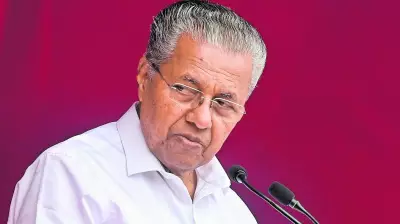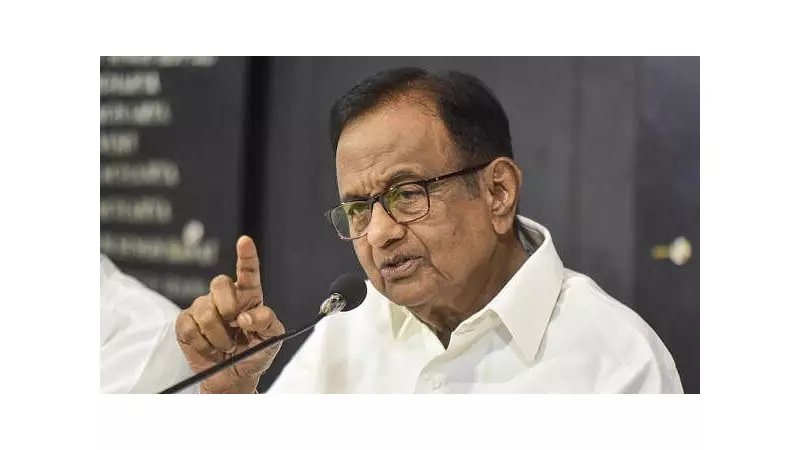
Senior Congress leader and former Finance Minister P Chidambaram has publicly dismissed a recent economic comparison made by Congress data analyst Praveen Chakravarty. The controversy centers on Chakravarty's analysis comparing the debt situations of Tamil Nadu and Uttar Pradesh, which Chidambaram has labeled as "flawed."
A Public Rejection of Economic Debate
In a notable statement, Chidambaram clarified his position on engaging in public discussions about the economy. He explicitly stated that he did not wish to enter into a public debate with "intellectuals" on economic matters. The veteran politician humbly added that he did not consider himself qualified enough to comment extensively on such complex topics in that forum.
This development, reported on January 1, 2026, highlights internal discussions within political circles regarding fiscal policy and state finances. The core of the disagreement lies in the methodological framework used to compare the financial health of two major Indian states with vastly different economies and populations.

The Flawed Comparison: Tamil Nadu vs. Uttar Pradesh
While Chidambaram did not delve into granular details of the debt data in his public rebuttal, his central argument is that Praveen Chakravarty's comparison is fundamentally unsound. Analysts suggest such comparisons often fail to account for critical contextual factors.
These factors include:
- Population size and density: Uttar Pradesh has a significantly larger population than Tamil Nadu, affecting per capita debt calculations.
- Revenue generation capacity: States have different levels of own tax revenue and economic output.
- Central fund allocation: The devolution of funds from the central government varies.
- Historical spending on infrastructure and social sectors: Investment patterns over decades differ.
By declaring the comparison flawed, Chidambaram has shifted the focus from the raw numbers to the principles of equitable fiscal analysis. This move is seen as an effort to steer the political narrative towards a more nuanced understanding of public finance.
Implications for Political Discourse
Chidambaram's refusal to engage in a technical public sparring, while simultaneously critiquing the premise of the debate, carries significant weight. It underscores a strategic choice to avoid a potentially divisive intra-party or public argument on economic data that could be simplified or misinterpreted.
Furthermore, his statement reflects a broader caution among seasoned politicians about the oversimplification of complex economic indicators for political point-scoring. The episode involving Praveen Chakravarty and P Chidambaram reveals the ongoing tension between data-driven political narratives and traditional, experience-based political commentary.
Ultimately, this exchange highlights the critical importance of context in economic debates within Indian politics. It serves as a reminder that comparisons between states require a deep dive into structural factors beyond headline debt figures, a nuance that Chidambaram insists was missing in the initial analysis.