

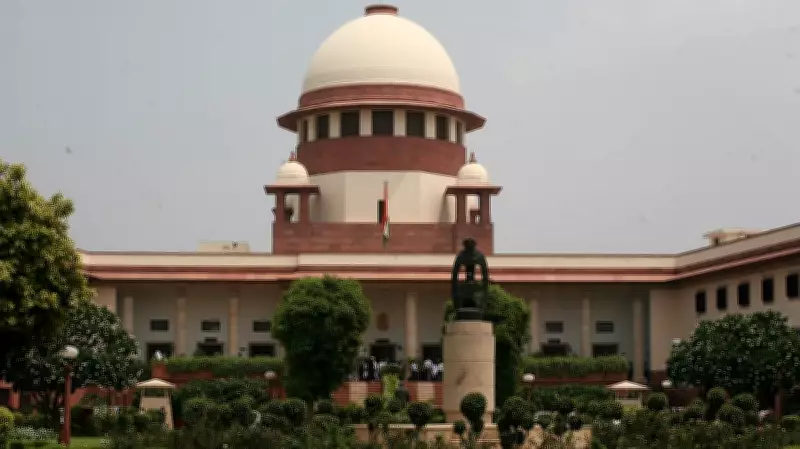
CITU Condemns Supreme Court's Stance on Menstrual Leave
The Centre of Indian Trade Unions (CITU) has launched a sharp critique against the Supreme Court of India, labeling its recent comments on women's menstrual leave as a 'misleading textbook response'. This rebuke follows remarks made by Chief Justice of India Suryakant Mishra and Justice Joymala Bagchi, who expressed concerns that mandating menstrual leave policies could potentially hinder future job opportunities for women in the workforce.
Judicial Remarks Spark Controversy
During a recent hearing, the Supreme Court justices articulated apprehensions about the long-term career prospects for women if menstrual leave were to be enforced as a compulsory policy. While the court acknowledged the importance of addressing women's health needs and encouraged voluntary initiatives by employers, it stopped short of endorsing a mandatory framework. The justices argued that such mandates might inadvertently lead to discrimination in hiring practices, as employers could become reluctant to hire women due to perceived additional leave burdens.
This perspective has ignited a firestorm of debate among labor rights groups and women's advocacy organizations, who argue that the court's stance undermines efforts to promote gender equality and workplace inclusivity.

CITU's Strong Rebuttal
In a strongly worded statement, CITU slammed the Supreme Court's remarks, accusing the judiciary of providing an out-of-touch and simplistic analysis of a complex socio-economic issue. The trade union emphasized that menstrual health is a legitimate concern that requires proactive measures, not dismissive commentary. CITU pointed out that voluntary policies are often insufficient, as they rely on employer goodwill, which can be inconsistent and leave many women without adequate support.
The union called for a more nuanced approach, advocating for mandatory menstrual leave policies that are backed by legal protections to prevent discrimination. CITU stressed that such measures are essential for ensuring women's health and dignity in the workplace, and that fears over job prospects should not be used as an excuse to deny basic rights.
Broader Implications for Women's Rights
This controversy highlights the ongoing struggle for women's rights in India, particularly in balancing health needs with economic participation. Key points from the debate include:
- The need for comprehensive policies that address menstrual health without stigmatizing women.
- The role of the judiciary in shaping social policies and its impact on gender equality.
- The importance of involving labor unions and women's groups in policy discussions to ensure diverse perspectives are considered.
As the discussion evolves, stakeholders are urging for a collaborative effort to develop frameworks that support women's health while safeguarding their career opportunities. The Supreme Court's comments have underscored the delicate balance required in policymaking, but CITU's response signals a demand for more progressive and enforceable solutions.
This incident serves as a reminder of the persistent challenges in achieving gender parity in the workplace and the critical role of legal and institutional support in driving change.






