

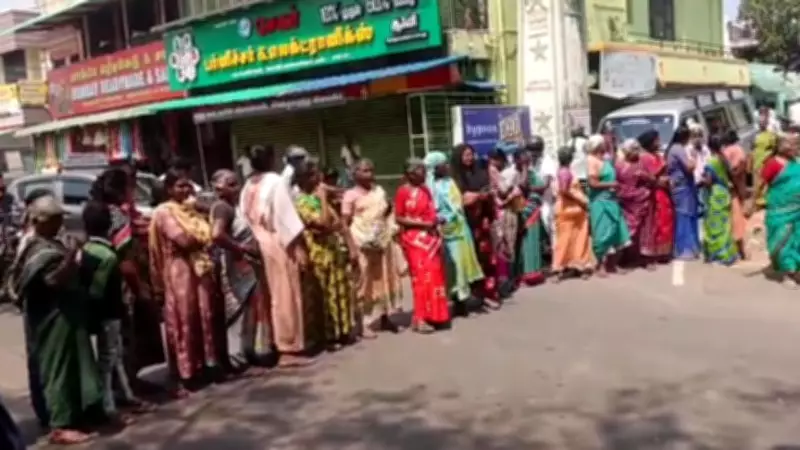
Coimbatore Residents Protest Exclusion from Alleged Cash-for-Votes Distribution
In a dramatic turn of events in Coimbatore, residents of Kottur took to the streets on Monday, blocking the main road to Pollachi in protest. Their grievance was not against political corruption in general, but rather their specific exclusion from what they claimed was a cash-for-votes distribution by a political party. The protesters expressed frustration that while households in several other areas of Kottur had reportedly received money, their own locality had been completely overlooked.
Demands for Inclusion and Police Intervention
The agitated crowd demanded that they too receive the monetary payments, treating it as a matter of fairness within what they perceived as an established practice. However, police officers on the scene delivered a stern warning, informing the protesters that both demanding and accepting money for votes constitutes a serious criminal offence under election laws.
After police threatened to register cases for unlawful assembly and obstruction of a public road, the crowd eventually dispersed. This confrontation highlighted the complex dynamics between voter expectations and legal boundaries during election periods.

District Administration Response and Broader Implications
Officials revealed that the district administration had already received multiple complaints about money distribution in the area, but noted this was the first protest specifically about being excluded from such payouts. In response to the incident, authorities have directed flying squads and static surveillance teams to intensify their patrolling in the Kottur area with the specific aim of tracing the source of the alleged cash distribution.
A local social activist commented on the incident, noting that it demonstrates how deeply rooted such practices have become in certain communities. The activist observed that some residents now treat cash-for-votes as an entitlement rather than recognizing it as illegal electoral malpractice that undermines democratic processes.
The protest has raised concerns about the normalization of vote-buying practices and the challenges election authorities face in combating such activities while maintaining public order. As election monitoring intensifies in the region, this incident serves as a stark reminder of the persistent issues surrounding money in politics and voter expectations during electoral periods.






