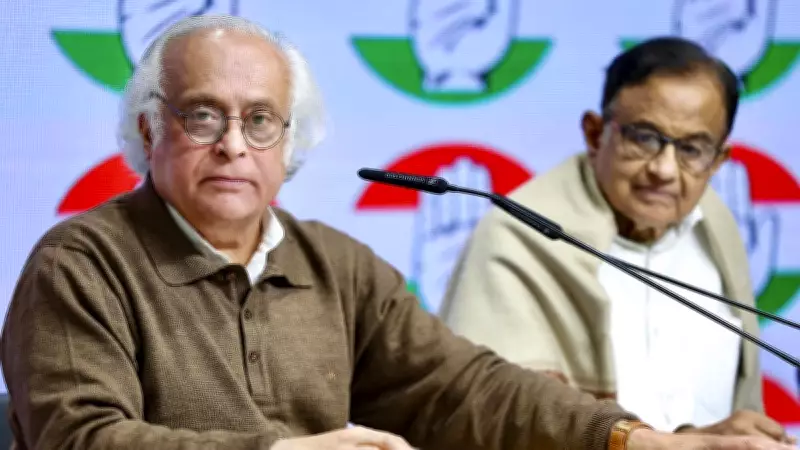
Congress Leaders Launch Fierce Attack on Prime Minister Over Delimitation and Constitutional Amendment Issues
Senior Congress leaders have unleashed a blistering assault on the Prime Minister, accusing him of systematic deception regarding critical parliamentary matters. The controversy centers on delimitation processes and constitutional amendments that directly impact parliamentary seat allocations across states.
Jairam Ramesh's Direct Accusation of Leadership Failure
Congress General Secretary Jairam Ramesh posted a scathing critique on social media platform X, characterizing the Prime Minister as what he termed a "Misleader" rather than a genuine leader. Ramesh asserted that the Prime Minister possesses what he described as an "unmatched ability" to mislead the nation, going so far as to label him a "habitual liar" who allegedly cannot speak truth even inadvertently.
The core of Ramesh's accusation revolves around what he claims is deliberate deceit regarding delimitation questions. According to Raising serious concerns about transparency and honesty in governance, Ramesh suggested that the government has engaged in misleading representations about how parliamentary constituencies are being redrawn and allocated.

P. Chidambaram's Specific Allegations About Tamil Nadu Seats
Former Finance Minister and senior Congress leader P. Chidambaram presented more specific allegations regarding how constitutional amendment legislation would affect Tamil Nadu's parliamentary representation. In his social media post, Chidambaram revealed that he had been expressing concerns about this issue for the past week, claiming that his warnings have now been proven correct.
Chidambaram provided specific numbers to support his allegations. He noted that Tamil Nadu currently has 39 seats in the Lok Sabha (the lower house of Parliament), but claimed that government representatives had suggested this number would increase to 58. Chidambaram dismissed this projection as what he called "mere illusion" or deception.
The Congress leader further alleged that when actual delimitation occurs, the promised increase to 58 seats would actually result in only 46 seats for Tamil Nadu. This discrepancy between promised and actual seat allocations forms the basis of Chidambaram's accusation of governmental deception.
Broader Political Implications of the Allegations
The accusations from two senior Congress leaders point to several significant political issues:
- Transparency in parliamentary processes: The leaders question whether the government is being honest about how constituencies are being redrawn
- Federal representation concerns: The specific focus on Tamil Nadu raises questions about how different states are affected by delimitation
- Constitutional amendment implications: The reference to constitutional amendment legislation suggests broader changes to parliamentary structure
- Political accountability: The direct personal accusations against the Prime Minister represent an escalation in political rhetoric
These allegations emerge at a time when delimitation processes and constitutional amendments represent some of the most significant potential changes to India's parliamentary democracy. The redrawing of constituency boundaries affects political representation across states and can significantly alter the balance of power in Parliament.
The Congress party's coordinated attack through two of its most prominent leaders suggests this issue will become a major point of political contention. The specific nature of the allegations—with concrete numbers and references to particular legislation—indicates this is more than general political criticism but rather a targeted challenge to government claims about parliamentary reforms.
As the political debate intensifies, these accusations raise fundamental questions about transparency in governance, the accuracy of governmental communications, and the integrity of processes that determine parliamentary representation for millions of Indian citizens across different states.