The political landscape in India has been rocked by a fresh controversy surrounding the national song Vande Mataram, with the Congress party launching a strong counterattack against Prime Minister Narendra Modi. The party has dug deep into historical archives to defend its position, citing an 87-year-old Congress Working Committee statement from 1937.
Historical Defense Against Modern Allegations
The controversy erupted when Prime Minister Modi, during a recent political address, suggested that the Congress party had objections to Vande Mataram and questioned its commitment to national symbols. The Prime Minister's remarks immediately drew sharp reactions from opposition parties, particularly the Congress, which decided to fight history with history.
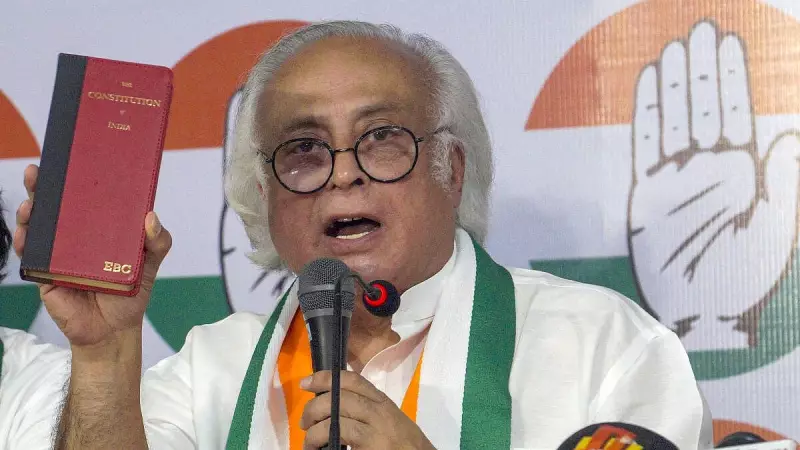
Congress general secretary Jairam Ramesh emerged as the party's primary voice in this confrontation. He presented what he described as "historical truth" by referencing the Congress Working Committee's resolution from October 15, 1937. This carefully preserved document from the pre-independence era has become the cornerstone of Congress's defense strategy.

The 1937 Resolution: A Balanced Approach
The 1937 CWC statement, adopted during a crucial period of India's freedom struggle, reveals the nuanced approach taken by nationalist leaders toward Vande Mataram. According to the resolution, while the song held a "special significance" in the national movement, the Congress leadership recognized the need for sensitivity toward India's diverse religious communities.
The historical document explicitly stated that "the National Flag should be greeted by people standing and the National Anthem should be sung on such occasions." More importantly, it clarified that "whereas the first two stanzas of the song Vande Mataram should be given an equal status with the National Anthem, the rest of the song is not considered essential for such occasions."
This careful distinction made by the Congress leadership in 1937 demonstrates their awareness of the complex social fabric of India even during the freedom struggle. The resolution effectively created a framework where Vande Mataram could be honored while respecting the sentiments of all communities.
Tagore's Legacy Enters the Fray
The controversy took an additional literary and cultural dimension when Jairam Ramesh accused Prime Minister Modi of "insulting" Nobel laureate Rabindranath Tagore. The Congress leader pointed to Tagore's own reservations about certain aspects of Vande Mataram while acknowledging the poet's recognition of its "historical role" in the national movement.
Ramesh emphasized that Tagore, despite his criticisms, had acknowledged the song's importance in inspiring generations of freedom fighters. This nuanced understanding of Tagore's position contrasts sharply with what the Congress describes as the Prime Minister's oversimplified portrayal of the historical context.
The Congress communication specifically highlighted that "the manner in which the Prime Minister invoked Vande Mataram showed either a deliberate distortion of history or a concerning ignorance of India's complex freedom struggle narrative."
Political Reactions and Implications
The Vande Mataram controversy has quickly escalated into a major political battlefield, with both sides digging in their positions. The Congress party's decision to reach back to 1937 for its defense indicates the seriousness with which it views the Prime Minister's allegations.
Political observers note that this controversy touches upon several sensitive aspects of Indian politics:
- The interpretation of historical events and documents
- The relationship between nationalism and religious sensitivity
- The political use of national symbols during election seasons
- The legacy of freedom movement leaders and their decisions
The timing of this controversy is particularly significant as it comes during a period of intense political activity in the country. Both the ruling party and opposition are positioning themselves as the true inheritors of India's freedom movement legacy.

As the debate continues to unfold, historians and political analysts are closely examining the 1937 CWC statement and its contemporary relevance. The document represents not just a historical artifact but a living part of the ongoing discussion about India's national identity and the symbols that represent it.
The Congress party has made it clear that it will continue to use historical documents to counter what it calls "misinformation" about its stance on national symbols. Meanwhile, the ruling party maintains that its position reflects true nationalist spirit without compromises.