The political landscape in India witnessed another heated exchange as the Congress party demanded an apology from Prime Minister Narendra Modi following Union Home Minister Amit Shah's remarks about the adoption of Vande Mataram as the national song.
Historical Context of Vande Mataram Adoption
The controversy erupted when Amit Shah claimed during a parliamentary debate that the Congress had opposed the adoption of Vande Mataram as the national song. However, Congress leaders swiftly countered this assertion by presenting historical evidence showing that only two paragraphs of the song were officially adopted based on the recommendation of Nobel laureate Rabindranath Tagore.
Congress general secretary Jairam Ramesh emphasized that the decision to adopt selective portions of Bankim Chandra Chattopadhyay's original composition was taken following Tagore's advice. The renowned poet had expressed concerns that some parts of the song containing religious references might not be suitable for a diverse nation like India.

Political Fallout and Demands
In a strong rebuttal, the Congress party accused the Home Minister of distorting historical facts and demanded that Prime Minister Modi apologize for what they termed as "misrepresentation" of history. The party leadership stressed that the truncated version was adopted precisely to maintain communal harmony and ensure the song's universal acceptance across all communities.
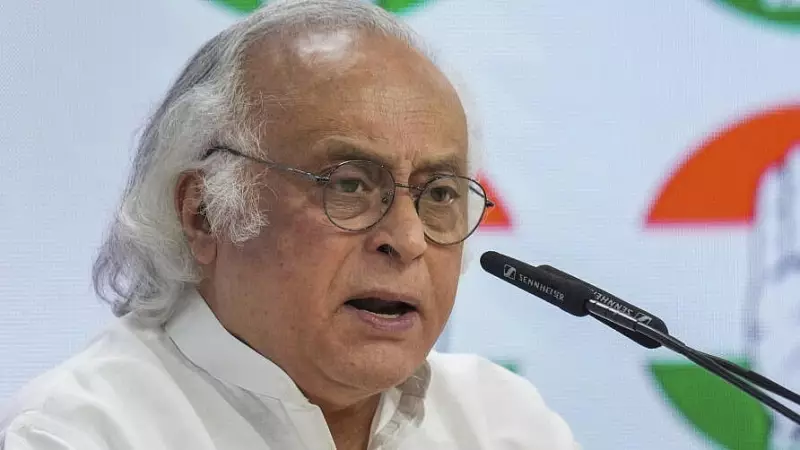
Jairam Ramesh, while addressing the media, provided detailed historical context about the adoption process. He explained that the Constituent Assembly, after careful consideration and following Tagore's guidance, decided to adopt only the first two paragraphs of Vande Mataram as the national song. This decision was taken to respect the sentiments of all communities while preserving the song's patriotic essence.
Broader Political Implications
The controversy has reignited debates about historical narratives and their political instrumentalization. The Congress party's sharp reaction underscores the ongoing tensions between the ruling BJP and opposition parties regarding the interpretation of India's freedom struggle and national symbols.
This incident occurs against the backdrop of ongoing parliamentary proceedings where historical references and national symbols have frequently become points of contention between political parties. The Vande Mataram debate particularly highlights how historical decisions taken for national integration are being reinterpreted in contemporary political discourse.
Political observers note that such controversies often surface during parliamentary sessions, reflecting deeper ideological divides between political parties regarding national identity and historical legacy. The demand for an apology from the Prime Minister indicates the opposition's strategy to counter what they perceive as historical revisionism by the ruling party.