In a sharp attack during the Lok Sabha debate on Tuesday, the Congress party raised serious concerns about the newly introduced Sustainable Harnessing and Advancement of Nuclear Energy for Transforming India (SHANTI) Bill, 2025. The party accused the government of diluting crucial nuclear liability norms, compromising regulatory independence, and paving the way for private corporate entry into the sensitive nuclear energy sector without sufficient safeguards.
Revisiting Political History and Questioning Timing
Participating in the debate, Congress MP Manish Tewari reminded the Treasury benches of the Bharatiya Janata Party's (BJP) past opposition to the landmark India-US civil nuclear deal under the UPA government. He pointed out that the BJP had moved a no-confidence motion against the government at that time, attempting to derail a key strategic initiative.
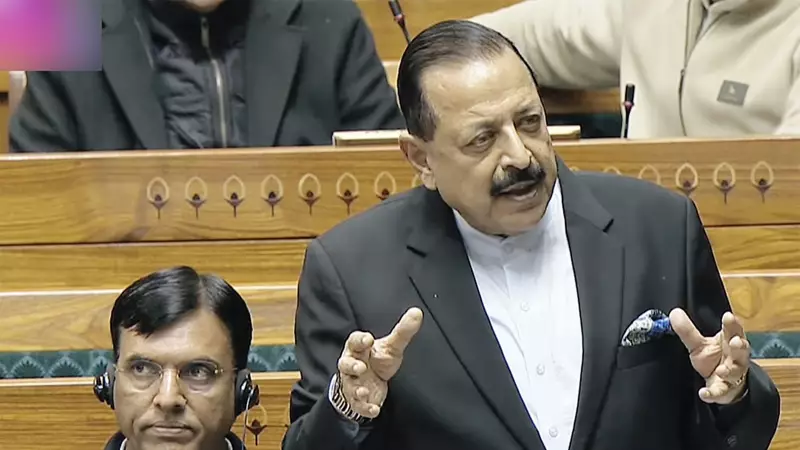
Turning to the present legislation, Tewari alleged the Bill is designed to facilitate private participation. He pointedly questioned the timing, noting that a major corporate conglomerate, the Adani Group, announced its intent to enter the nuclear energy space in late November 2025. The SHANTI Bill was introduced by Minister of State for Atomic Energy Jitendra Singh in December 2025. "Is it a coincidence?" Tewari asked, suggesting a correlation between corporate interest and legislative action.

Core Concerns: Eroding Supplier Liability and Regulatory Autonomy
The central thrust of Tewari's criticism focused on the Bill's treatment of liability. He argued that it effectively repeals a critical provision of the Civil Liability for Nuclear Damage Act, 2010. Specifically, he highlighted Section 17(b) of the old Act, which gave the operator of a nuclear installation the right to seek recourse from suppliers if an incident was caused by defective equipment or services.
"In this Bill, there is not a single clause which talks about supplier liability. It has been completely removed," Tewari stated. He emphasized that this provision had enjoyed cross-party consensus and was supported by the Department of Atomic Energy itself when India began engaging foreign suppliers. He demanded an explanation from the government on how removing this clause protects national interests, especially if the sector is opened to private players reliant on foreign technology.
Furthermore, Tewari raised alarms about the autonomy of the Atomic Energy Regulatory Board (AERB). He argued that with an expanded nuclear sector involving private entities, a truly independent and neutral regulator is paramount. The Bill, he claimed, lacks clarity on ensuring the AERB's autonomy.
Objections on Liability Cap, Insurance, and Waste Management
Tewari also objected to specific clauses within the proposed legislation. He criticized Clause 13, which caps the liability for a nuclear accident at $410 million. Drawing a stark comparison, he noted that the compensation for the Bhopal gas tragedy was about $470 million, questioning why the government was imposing such a limit. He advocated for a liability of at least Rs 10,000 crore.
Another provision he flagged exempts government-owned nuclear installations from mandatory insurance. Tewari argued that if sovereign cover is being claimed, it should be explicitly mentioned in the Bill.
On the critical issue of radioactive waste, the Congress MP said the Bill is silent on the long-term management of spent fuel, which remains hazardous for millennia. He noted that most countries store spent fuel at the facility itself, but the SHANTI Bill fails to provide a clear framework for the disposal of such toxic waste.
Call for Scrutiny and Wider Consultation
Concluding his arguments, Manish Tewari contended that the proposed law could undermine India's energy independence and its clean energy goals. Given the serious and far-reaching implications of the legislation, he urged the government to refer the SHANTI Bill to a Joint Parliamentary Committee (JPC) for comprehensive scrutiny and wider stakeholder consultation before it is passed into law.