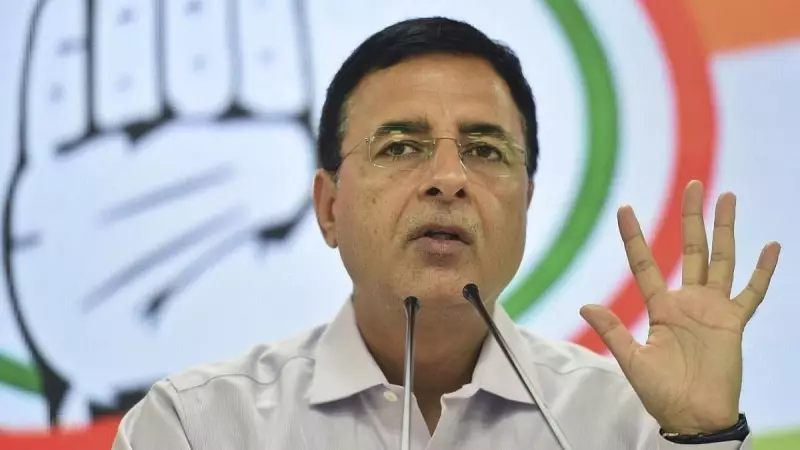
In a sharp accusation, the Congress party has claimed that the central government is deliberately withholding crucial information from Parliament regarding the number of deaths caused by air pollution in India. The allegation was made by senior Congress spokesperson Randeep Singh Surjewala on December 19, 2025.
The Core Allegation: A Systemic Trick
Surjewala asserted that the government is using a technical loophole to avoid accountability on the severe public health crisis triggered by toxic air. He explained that the official strategy hinges on the way mortality is recorded. Air pollution is rarely listed as a direct cause of death on medical certificates. Instead, the immediate ailments it causes—such as heart attacks, strokes, asthma attacks, and other lung diseases—are documented.
"Understand the government's trick," Surjewala stated. "Air pollution isn't even mentioned on death certificates. What's written instead — heart attack, stroke, asthma, lung disease. But the poison is still that same air." This, he argued, allows the administration to sidestep direct questions in the House about fatalities linked to pollution, as the data is not categorised under that specific head.

Parliamentary Accountability in Question
The charge implies a significant gap in parliamentary transparency and governance. By not collating or acknowledging the root cause behind a surge in respiratory and cardiovascular deaths, especially in heavily polluted regions, the government avoids declaring a clear national health emergency linked to environmental factors. This lack of formal data, according to the opposition, hampers the framing of urgent and targeted policy responses.
The issue brings to the forefront the ongoing debate about how India measures and addresses the health impact of its deteriorating air quality. Medical experts have long corroborated that while a death certificate may cite a cardiac arrest, prolonged exposure to polluted air is often the primary trigger that exacerbates underlying conditions, leading to mortality.
Implications and Public Health Crisis
The controversy underscores a deeper public health and governance crisis. If the allegation holds true, the official statistics on deaths attributable to air pollution would be vastly underreported, masking the true scale of the problem. This has direct consequences for resource allocation, public awareness campaigns, and the political will to enforce stricter environmental regulations.
Surjewala's statement, made to the press, is likely to intensify demands from the opposition and civil society groups for a more robust and honest system of reporting pollution-linked morbidity and mortality. The call is for the government to acknowledge the indirect causal chain and provide comprehensive data to Parliament, enabling informed legislative action.
As of now, the government has not issued an official response to these specific allegations made on Friday. The development sets the stage for a potential confrontation in the upcoming parliamentary sessions, where the opposition is expected to press for clearer answers on this matter of national health.