

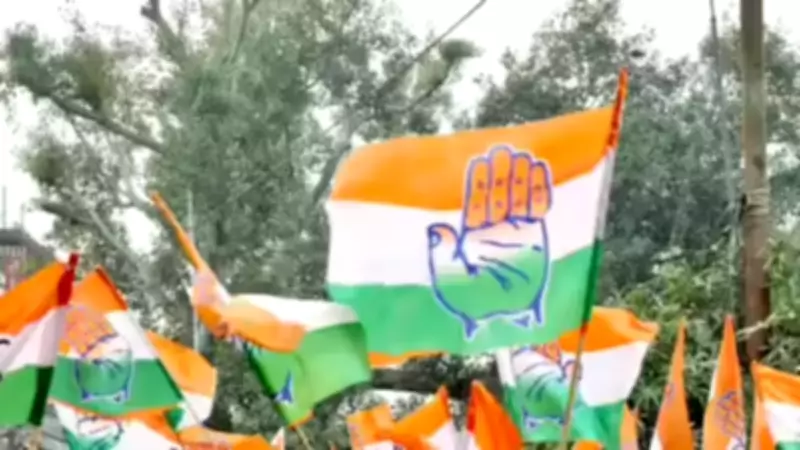
NEW DELHI: The political trajectory of the Congress party following the 2014 general elections has been marked by a recurring theme: a decisive defeat in national polls followed by a prolonged period of struggle to secure victories in state assembly elections. This pattern was starkly evident after the 2019 Lok Sabha elections, which were heavily influenced by the Pulwama incident, where Congress endured a barren spell of three and a half years before clinching a state win in Himachal Pradesh.
Congress's Strategic Focus on Kerala 2026
Currently, Congress is pinning its hopes on the upcoming Kerala elections in 2026 to finally break this cycle of electoral setbacks. The party had anticipated immediate successes after the 2024 Lok Sabha polls, with potential wins in Haryana and Maharashtra, but those hopes were dashed. Now, the focus has shifted to Kerala, where a victory is seen as crucial for revitalizing the party's fortunes and re-establishing its relevance in Indian politics.
Opportunities in Multiple States
The upcoming polls in four states and one union territory present a significant opportunity for Congress to regain its footing. The party had prematurely believed that its commendable performance in the challenging 2024 national elections would automatically translate into state-level successes. However, the reality has been more complex, with Kerala emerging as the linchpin of Congress's electoral strategy for the near future.

Beyond Kerala, Congress is aiming to make substantial political inroads in Assam, Tamil Nadu, and West Bengal. This is particularly important as the Bharatiya Janata Party (BJP), its arch-rival, has aggressively expanded its presence across the country, positioning itself as a dominant force in national politics. Since the BJP, under Prime Minister Narendra Modi's leadership, transformed into a political juggernaut, Congress, led by Rahul Gandhi, has sought to define itself ideologically in direct opposition to the BJP. This stance has also fostered greater unity among secular parties, despite internal rivalries.
Ending Political Dichotomies
In a notable shift, Congress has moved to resolve a longstanding contradiction in its political alliances. Historically, the party was allied with the Communist Party of India (Marxist) at the national level and in West Bengal, while simultaneously competing against it in Kerala. This inconsistency provided the BJP with an easy line of attack. To counter this, Congress made an early decision to contest the Bengal elections independently, signaling a more cohesive strategy.
Challenges in Assam
In Assam, the political landscape has become increasingly barren for Congress, with the party suffering back-to-back defeats. Factors such as communal polarization, marginalization through defections, and state-specific delimitation have compounded the challenges. In response, Congress has belatedly chosen Gaurav Gogoi, a young leader with a strong socio-political pedigree, as its standard-bearer. The party is hopeful that a respectable performance in Assam can dispel the growing perception of the state becoming a one-party domain dominated by the BJP and help maintain Congress's presence there.
Tamil Nadu Dynamics
After some public disagreements with the Dravida Munnetra Kazhagam (DMK), Congress settled for a minor seat share in the Tamil Nadu elections. With the BJP aligning itself with the AIADMK-led bloc and speculation rife that the Tamil superstar Vijay's party, TVK, might be influenced by the BJP post-elections, Congress is keen to ensure that the DMK emerges victorious. The political landscape in Tamil Nadu has become more favorable for the DMK following the era of Jayalalithaa, as evidenced in the 2024 Lok Sabha polls. However, the rise of TVK and the potential for a three-way split of votes have introduced new uncertainties into the electoral equation.

West Bengal's Solo Run
In West Bengal, Congress has been reduced to a fringe player in Mamata Banerjee's stronghold. The party is now pursuing a two-fold objective in its independent campaign. Firstly, it aims to avoid repeating the dismal performance of the 2021 elections, where it secured zero seats and only 3% of the vote share. Secondly, as stated by AICC state in-charge Ghulam Ahmad Mir, Congress is targeting an increase in its vote share to over 15%, signaling a renewed effort to rebuild its base in the state.
Overall, Congress's electoral strategy in the coming years hinges on breaking its post-2014 drought with a win in Kerala, while simultaneously working to strengthen its position in other key states to challenge the BJP's expanding influence.





