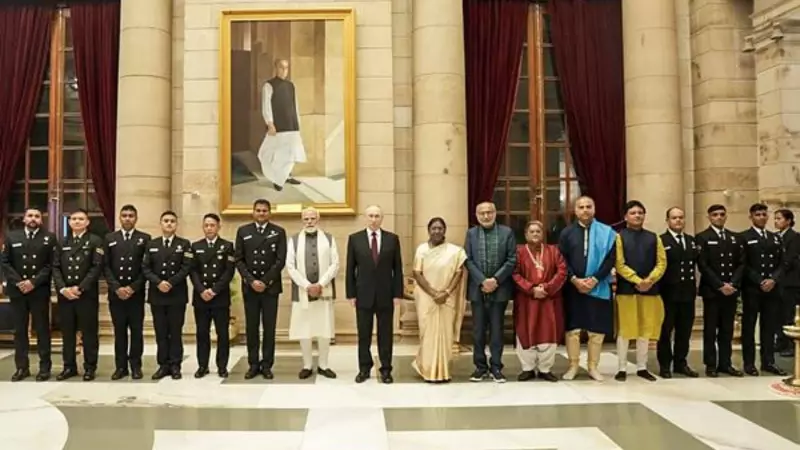
The official state banquet hosted by President Droupadi Murmu for visiting Russian President Vladimir Putin has ignited a fresh political controversy in New Delhi. The trigger was the conspicuous absence of invitations for the Leaders of Opposition in both Houses of Parliament, Rahul Gandhi and Mallikarjun Kharge.
A Broken Tradition Sparks Political Firestorm
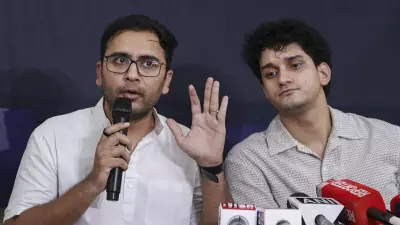
The Congress party swiftly condemned the omission, labeling it "another low" and a departure from a decades-old diplomatic practice. This practice involved formal "call-on" meetings between visiting foreign dignitaries and the Leader of the Opposition, a convention that projected a united domestic front.
Former Union Minister Anand Sharma highlighted that during the UPA government's tenure (2004-2014), such meetings were a standard part of the printed itinerary issued by the Ministry of External Affairs (MEA). He stated that between 2004 and 2014, Leaders of the Opposition had 162 meetings with global figures, including US President Barack Obama, Chinese Premiers, and Russian leaders.

"It has been a tradition and practice, which was always respected by all governments," Sharma said, adding that not inviting the LoPs to the banquet makes the President's office "blatantly partisan."
BJP Counters: Onus on Visiting Delegation
The Bharatiya Janata Party (BJP) rejected these allegations, shifting the responsibility onto the visiting foreign delegation. BJP spokesperson Sambit Patra clarified that the MEA's role is to facilitate meetings with government officials. Meetings with non-government individuals, he argued, are decided by the visiting delegation itself.
Patra pointed out that Rahul Gandhi, since becoming LoP in 2024, has already met with five visiting heads of state, including the Prime Ministers of Bangladesh, Vietnam, and Malaysia. "So whichever delegation desired to meet Rahulji… he had a meeting with all of them," Patra stated.
Government sources also cited the official Table of Precedence, arguing that no protocol was breached. They noted that the only Opposition representative at the Putin dinner was Congress MP Shashi Tharoor, who attended in his capacity as Chairman of the Parliamentary Standing Committee on External Affairs.
The Fading Norm: A Look at Past Precedents
The current scenario marks a stark contrast to engagements during previous administrations, both UPA and the early years of the NDA.
In November 2010, during US President Barack Obama's visit, then Leader of Opposition Sushma Swaraj of the BJP met him. In January 2015, after Prime Minister Narendra Modi took office, Obama again met the then Congress president Sonia Gandhi, former PM Manmohan Singh, Rahul Gandhi, and Anand Sharma.
A significant precedent was set in December 2014 when Sonia Gandhi met visiting Russian President Vladimir Putin. Gandhi had remarked to Putin that the Congress could take some credit for the success of his meeting with PM Modi, referencing the close ties during the Manmohan Singh era.
However, this convention has steadily eroded over the past decade. The MEA gradually stopped listing Opposition leader meetings in official itineraries. While some meetings occurred, like Sonia Gandhi's with Putin in 2014 or Rahul Gandhi's with Chinese President Xi Jinping in September 2014, they were no longer formalized as part of the schedule.
The BJP also offered a counter-narrative, accusing Rahul Gandhi of frequently skipping major national events like Republic Day celebrations and the swearing-in of the Vice President, thereby questioning his commitment to national unity ceremonies.
As the war of words continues, the episode underscores a significant shift in India's diplomatic protocols. The unwritten consensus on showcasing bipartisan engagement to foreign leaders appears to be fading, replaced by a more government-centric approach, raising questions about political propriety and the traditions of India's parliamentary democracy.