

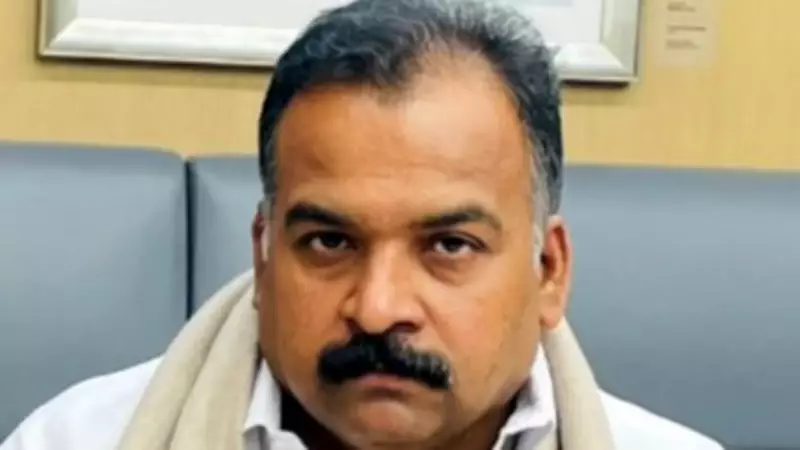
Congress MP Manickam Tagore Condemns Suspension of Opposition MPs as Undemocratic
Congress whip in Lok Sabha Manickam Tagore has strongly criticized the suspension of eight Opposition MPs on Tuesday, labeling it as an unacceptable attempt to silence democratic dissent. In an exclusive interview, Tagore expressed deep concern over what he described as systematic efforts to undermine parliamentary norms and Opposition voices.
Government's Justification Versus Opposition's Perspective
The government has cited unruly behavior as grounds for the suspensions, but Tagore offers a different interpretation. "You have to understand there is action and then a reaction," he explained. "It is a custom that the Leader of Opposition is allowed to speak on the President's address. Yesterday, Rahul Gandhi was disturbed many times."
Tagore emphasized that when Gandhi attempted to authenticate his statements by referencing former Army chief General M M Naravane's unpublished memoir, his speech was abruptly curtailed despite having four hours of allotted time remaining. "How is this democratic?" he questioned, adding that this pattern represents broader injustice against Opposition members.

Broader Opposition Unity Against Parliamentary Procedures
The Congress MP revealed significant unity among Opposition parties regarding this matter. "All Opposition members refused to speak today till the LoP spoke," Tagore stated, suggesting this collective action demonstrates widespread dissatisfaction with current parliamentary conduct.
He speculated that the government's approach might be motivated by desire to avoid discussion on sensitive issues including the Epstein files, US-India trade negotiations, and border tensions with China. "Mr Modi and Mr Amit Shah are uncomfortable when we speak," Tagore asserted.
Historical Context and Changing Parliamentary Norms
Drawing from his twelve years of parliamentary experience, Tagore contrasted current practices with historical precedents. "Sushma Swaraj, when she was the LoP, used to quote many things. No one asked for authentication," he recalled, suggesting that previous governments showed greater respect for Opposition voices.
He noted that such respect appears diminished today, possibly contributing to the BJP's reduced majority from 303 to 240 members. Regarding Gandhi's insistence on quoting from General Naravane's memoir, Tagore pointed out that ruling party members frequently reference materials without similar scrutiny.
Broader Implications for Democratic Discourse
Tagore expressed concern about the broader implications of these developments for Indian democracy. "They can't demolish democracy like this," he warned, emphasizing that silencing Opposition voices undermines fundamental democratic principles.
Regarding Rahul Gandhi's references to pressure on Prime Minister Modi and the Epstein files, Tagore revealed that adjournment motions to discuss these matters have been consistently rejected. "Why don't they want us in Parliament? Because we are asking the right questions and they know that," he concluded, suggesting that the government seeks to avoid uncomfortable truths through procedural obstruction.
The Congress MP's statements highlight growing tensions between government and Opposition in Parliament, raising important questions about democratic norms, parliamentary decorum, and the space for dissent in India's legislative processes.






