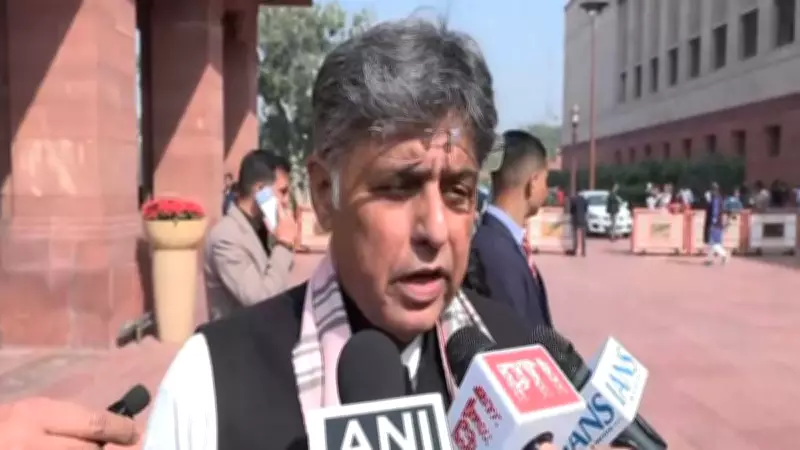
Congress MP Manish Tewari Accuses Government of Undermining Parliament's Role
In a sharp critique of the current political climate, Congress Member of Parliament Manish Tewari has alleged that the government has "walked the extra mile" to make Parliament "redundant." This statement comes amid ongoing disruptions in the Lok Sabha, where Opposition benches have repeatedly demanded a discussion on the India-US trade framework.
Parliamentary Proceedings Halted by Opposition Demands
The Lok Sabha witnessed significant disruptions today, as Opposition members insisted on a debate regarding the trade framework between India and the United States. These interruptions have stalled regular parliamentary business, highlighting the deepening rift between the ruling party and the Opposition.
Manish Tewari, a prominent Congress leader, used this context to launch a broader attack on the government's approach to parliamentary democracy. He argued that such scenarios are symptomatic of a larger issue where the executive branch is sidelining legislative oversight.

Tewari's Critique of Government's Parliamentary Conduct
In his remarks, Tewari emphasized that the government's actions have systematically eroded the functioning of Parliament. He pointed to the frequent adjournments and lack of substantive discussions as evidence that the institution is being rendered ineffective.
Key points from Tewari's criticism include:
- The government's reluctance to engage in meaningful debates on critical issues like international trade agreements.
- A pattern of avoiding parliamentary scrutiny on policies that have far-reaching implications for the economy and foreign relations.
- The alleged use of procedural tactics to bypass Opposition demands, thereby weakening democratic accountability.
Background on the India-US Trade Framework Dispute
The immediate trigger for the Lok Sabha disruptions is the Opposition's call for a discussion on the India-US trade framework. This framework encompasses various bilateral trade and investment issues, and Opposition parties argue that it requires thorough parliamentary examination to ensure transparency and national interest.
Despite these demands, the government has not scheduled a dedicated debate, leading to protests and adjournments. This standoff reflects broader tensions in Indian politics, where trade and diplomatic agreements often become focal points for political contention.
Implications for Parliamentary Democracy in India
Tewari's comments underscore growing concerns about the health of parliamentary institutions in India. Experts note that frequent disruptions can hinder legislative productivity, but they also highlight the importance of Opposition voices in a vibrant democracy.
The situation raises questions about:
- How to balance the government's legislative agenda with the Opposition's right to raise issues.
- The role of Parliament in scrutinizing international agreements that impact the country's economic future.
- Potential reforms to ensure smoother functioning while upholding democratic principles.
As of February 9, 2026, the deadlock continues, with no immediate resolution in sight. The ongoing disruptions serve as a reminder of the challenges facing India's parliamentary system and the need for constructive dialogue between all political stakeholders.