

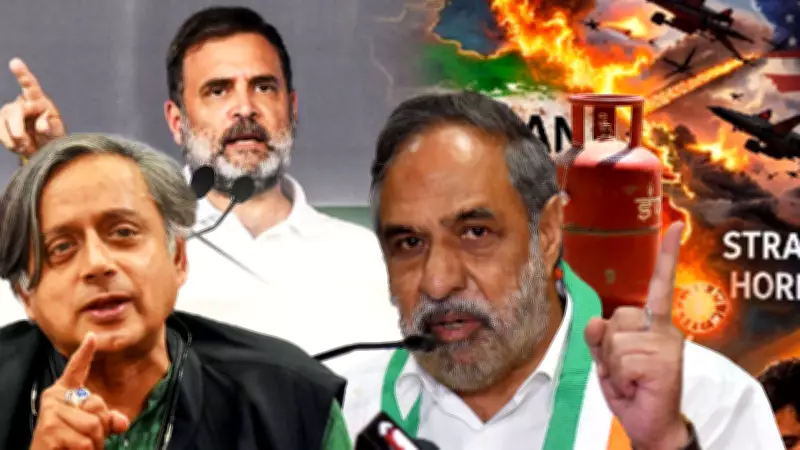
Congress Faces Internal Rift Over Iran War and LPG Crisis as Leaders Challenge Rahul Gandhi
A significant political divide has surfaced within the Congress party, with senior leaders openly countering the stance of Rahul Gandhi on critical national issues. This public disagreement highlights a deeper split in the party's approach to governance and foreign policy.
Divergent Views on Iran War Policy
Rahul Gandhi has been vocal in his criticism of the government's handling of the Iran war, labeling India's foreign policy as compromised. However, prominent Congress figures are presenting a contrasting perspective. Shashi Tharoor has described the government's actions as responsible statecraft, emphasizing a pragmatic approach to international relations.
Anand Sharma has publicly praised the diplomatic efforts, suggesting that the current strategy aligns with national interests. Similarly, Manish Tewari has indicated that the government is on the right track, subtly endorsing its foreign policy maneuvers amidst global tensions.

Dispute Over LPG Shortage Claims
Adding to the internal discord, senior leader Kamal Nath has rejected claims of an LPG shortage, directly opposing the party's official narrative. This move further exposes the lack of consensus within Congress on domestic issues, particularly as energy concerns escalate nationwide.
Implications for Party Unity
This public rift is more than a mere disagreement; it reflects a fundamental divergence in strategy on matters of national importance. As global tensions rise and energy security becomes a pressing issue, the Congress party now faces the formidable challenge of presenting a unified voice.
The open criticism from seasoned leaders like Tharoor, Sharma, Tewari, and Nath underscores a struggle within the party to reconcile differing viewpoints. This internal conflict could impact Congress's credibility and effectiveness in addressing both foreign policy and domestic crises.
With elections and public scrutiny intensifying, the party must navigate these divisions carefully to maintain cohesion and project a strong, consistent message to the electorate.






