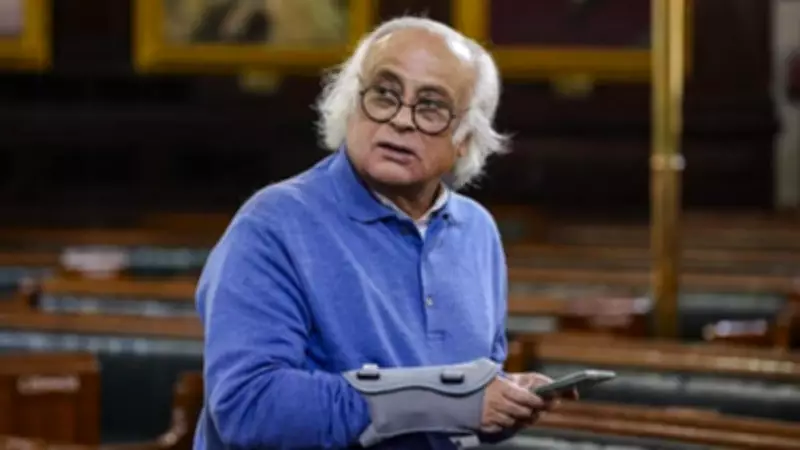
Congress Party Launches Scathing Attack on Government's Policy Coordination
The Congress party has intensified its political offensive against the ruling Bharatiya Janata Party (BJP) government, accusing it of severe lapses in policy-making coordination. This criticism comes at a crucial juncture, just ahead of the highly anticipated Union Budget presentation. The opposition has highlighted what it perceives as a systemic failure in aligning various governmental decisions, which it claims is adversely impacting the nation's economic framework and the well-being of its citizens.
Allegations of Disjointed Governance and Economic Implications
In a strongly worded statement, Congress leaders pointed to multiple instances where policies from different ministries appeared to be working at cross-purposes, leading to confusion and inefficiency. They argued that this lack of synergy is not merely an administrative issue but has tangible consequences for sectors ranging from agriculture to industry. The party emphasized that such disjointed approaches could undermine the effectiveness of the upcoming budget measures, potentially stalling growth and exacerbating inflationary pressures.
The timing of this critique is particularly significant, as the government prepares to unveil its fiscal roadmap for the next year. Congress has called for greater transparency and coherence in policy formulation, urging the administration to adopt a more integrated strategy that prioritizes long-term stability over short-term gains. This move is seen as part of a broader opposition effort to hold the government accountable on economic matters, especially in light of recent challenges like unemployment and rising prices.

Political Context and Broader Ramifications
This criticism from Congress adds to the ongoing political discourse in India, where economic management has become a central battleground between the ruling party and the opposition. By focusing on policy coordination, Congress aims to question the government's overall governance capabilities, suggesting that fragmented decision-making reflects deeper systemic issues. The party has also linked this to public dissatisfaction, arguing that poor coordination ultimately hurts ordinary Indians through delayed or ineffective implementation of welfare schemes.
As the budget session approaches, such allegations are likely to fuel debates in Parliament and beyond. Observers note that this could pressure the government to address these concerns in its budgetary announcements, potentially leading to more cohesive policy proposals. However, the BJP has yet to respond formally to these charges, leaving room for further political sparring in the coming days.
In summary, the Congress party's sharp rebuke underscores the high stakes involved in India's policy-making processes, with the upcoming budget serving as a critical test of the government's ability to deliver coordinated and impactful economic strategies.