

Congress Accuses Modi Government of Rushing India-US Trade Deal Without Transparency
The India-US trade deal announced by Washington on Monday night has ignited a fresh political firestorm in New Delhi, with the Opposition Congress party launching a scathing attack on Prime Minister Narendra Modi's government for what it calls a lack of transparency and hurried implementation.
Spin Doctors at Work: Congress Questions Deal Details
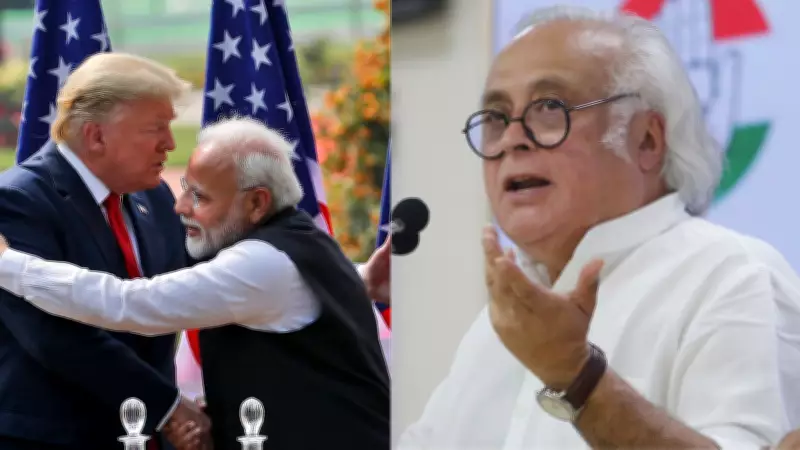
Congress general secretary in-charge communications Jairam Ramesh highlighted the conspicuous absence of a joint statement even 36 hours after US President Donald Trump's announcement. In a social media post, Ramesh pointed out that while the government's spin doctors were actively promoting the deal, there was still no clarity on the specific terms of the agreement.
Ramesh emphasized that it appears India has agreed to liberalize agricultural imports under the deal, raising serious concerns about the impact on domestic farmers. He insisted that both Parliament and the public deserve a comprehensive explanation for why this announcement was pushed through with such urgency.

Tariff Reduction: A Dubious Victory?
The trade deal, as announced by President Trump, involves the US reducing tariffs on Indian goods from 50 percent to 18 percent with immediate effect. However, Congress leader Supriya Shrinate has questioned how this can be projected as a win for India.
She noted that the US previously imposed an average tariff of under 3 percent on Indian goods, making the new 18 percent rate appear significantly higher. Shrinate warned that increased imports of American products could severely undermine the Make in India initiative and harm domestic manufacturing sectors.
- Potential damage to Indian farmers from liberalized agricultural imports
- Negative impact on domestic manufacturing and the Make in India program
- Questions about constraints on India's strategic autonomy, including oil purchases from Russia
Political Context and Broader Implications
The controversy unfolds against a backdrop of heightened tensions in Parliament, where Leader of Opposition Rahul Gandhi has intensified his criticism of PM Modi over the past two days. Gandhi suggested that the sudden clinching of the trade deal after months of stalled negotiations indicates the Prime Minister is under pressure.
Gandhi alleged this pressure stems from developments in the US involving industrialist Gautam Adani and the release of files linked to Jeffrey Epstein, claiming Modi has been compromised in some manner. These remarks came as parliamentary proceedings grew increasingly contentious, with Gandhi being repeatedly prevented from discussing certain national security matters.
- The deal was announced first by President Trump rather than through bilateral channels
- No detailed joint statement released despite 36 hours passing since announcement
- Concerns about how the deal might affect India's strategic partnerships with countries like Russia and Iran
The political row has escalated to the point where eight Opposition MPs were suspended for the remainder of the Budget Session following protests over procedural issues in Parliament. The Congress party maintains that this trade agreement, negotiated without proper transparency, could have far-reaching consequences for India's economic sovereignty and strategic independence.






