

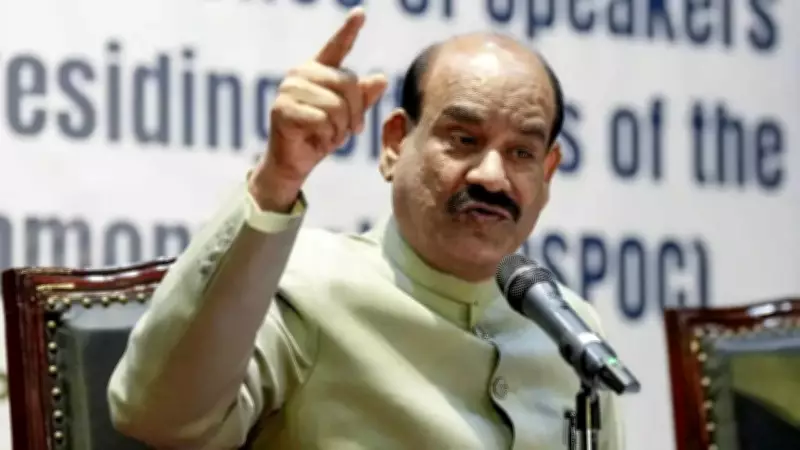
Congress Views Speaker Removal Notice as Powerful Signal on Opposition Treatment
In a significant political development, the Congress party has asserted that the removal notice against Lok Sabha Speaker Om Birla conveys a strong message regarding the perceived undermining of the opposition within Parliament under the current BJP-led government. According to Congress sources, the fate of this notice, given the ruling coalition's majority in the Lok Sabha, is considered only incidental to the broader symbolic impact.
Trinamool Congress Support Boosts Opposition Confidence
The opposition camp received a notable boost on Saturday when the Trinamool Congress (TMC) announced its backing for the no-confidence motion against Speaker Birla. This move marks an important twist, as the Bengal-based party did not initially sign the removal notice in February. Allies within the opposition expressed confidence in TMC's support, particularly in light of the upcoming elections in West Bengal, where the party is engaged in a direct contest with the BJP.
With this development, there is renewed optimism among opposition ranks that the impending vote will reveal a vertically divided Lower House, pitting the NDA against the INDIA bloc and other non-aligned parties. Parliamentary managers from the opposition claim that such a split would send an explicit message: the traditionally bipartisan role of the Speaker is no longer insulated from political fray, as it was under previous administrations.

Reinforcing Perceptions of an Unequal Battle
This situation, they argue, reinforces the perception that the opposition is facing an unequal battle even within the hallowed halls of Parliament. A key Congress member emphasized the necessity of this action, stating, "A message had to be sent. We had to register our protest that parliamentary democracy is under threat, and positions of constitutional authorities are being manipulated for political purposes."
However, lingering doubts persist within the anti-BJP camp regarding the government's potential strategy. There is concern that the administration might avoid a debate on the removal notice and instead proceed directly to a vote. In response, Congress and its allies are insistent that the issue must be thoroughly debated, providing Speaker Birla with an opportunity to defend his position publicly.
The unfolding scenario underscores deepening political tensions and highlights the ongoing struggles for parliamentary decorum and democratic principles in India's current political landscape.






