

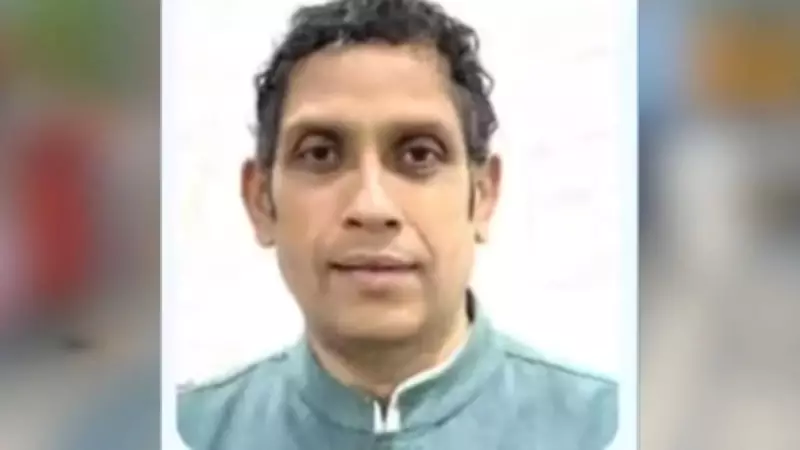
Congress Leader Discloses Internal Strategy in Tamil Nadu Alliance Negotiations
Just one month ago, the political landscape in election-bound Tamil Nadu appeared turbulent for the DMK-led Secular Progressive Alliance. Internal dissent within the Congress party created significant uncertainty, with a faction of leaders aggressively demanding a share in power as part of the coalition agreement. Among those engaging in discussions with Tamilaga Vettri Kazhagam (TVK) leader Vijay was Praveen Chakravarty, chairperson of the All India Professionals’ Congress and Data Analytics wing.
Chief Minister M K Stalin maintained a firm stance throughout these negotiations, ultimately resulting in Congress signing the seat-sharing agreement without securing the power-sharing demand that had caused considerable internal friction. In an exclusive interview, Praveen Chakravarty has now revealed crucial details about these behind-the-scenes negotiations and the Congress party's strategic positioning.
Leadership Approval for TVK Meetings
Question: Did you meet Vijay in your individual capacity or with the consent of Congress leadership?

"I had several meetings with Vijay over the past six months," Chakravarty revealed. "These were not conducted in an individual or private capacity. Every action I took during this period was executed with the full knowledge, consent, and explicit approval of the relevant Congress party leadership. I was prepared to be the fall guy if necessary during those critical negotiations."
This disclosure contradicts earlier narratives suggesting these meetings represented rogue elements within the party acting independently. Chakravarty emphasized that his actions were consistently aligned with his party's best interests, despite facing significant criticism from fellow Congress members who characterized his efforts as personal vendettas or individual initiatives.
Strategic Calculations Behind Seat Demands
Question: You previously suggested Congress might venture out independently. What was the strategic thinking?
"My primary objective was always strengthening the Congress party in Tamil Nadu," Chakravarty explained. "If instead of securing 28 seats we had negotiated for 60 seats, or if we had achieved a meaningful share in power, that would have represented genuine party strengthening. The current dissatisfaction among Congress workers stems directly from these unfulfilled aspirations."
The Congress leader acknowledged that party cadres were unhappy with the final allocation of 28 seats, particularly since there had been initial demands for approximately 40 constituencies. He suggested that as a national party, Congress faced broader political compulsions that likely influenced AICC president Mallikarjun Kharge's decision to accept the reduced allocation.
Internal Dissent and Alternative Options
Chakravarty provided unprecedented insight into internal Congress deliberations, revealing that during meetings convened by Rahul Gandhi and Mallikarjun Kharge, approximately two-thirds of functionaries favored a significant increase in seat allocation. Some participants explicitly supported the demand for power sharing, while others suggested exploring alternative political options if these objectives couldn't be achieved.
"When we discuss 'other options,'" Chakravarty noted, "TVK naturally emerges as the most viable alternative. There was never any realistic possibility of aligning with AIADMK or BJP, which made TVK discussions particularly strategic."
The Congress leader characterized TVK as a genuine political disruptor that has transformed from a fringe player to a force that must be seriously reckoned with in Tamil Nadu politics. He predicted this election would be intensely competitive for all alliances, including the DMK-Congress coalition.
Worker Dissatisfaction and Future Prospects
Chakravarty expressed concern about growing dissatisfaction among Congress workers in Tamil Nadu, who feel they haven't received appropriate respect within the alliance framework. He identified the limited seat allocation as the primary source of discontent and suggested that without expanding the political pie, these tensions would likely persist.

"Congress in Tamil Nadu resembles Hanuman from mythology—it doesn't fully recognize its own strength," Chakravarty observed. "This election presented a golden opportunity to revive, rebuild, and substantially strengthen the party in this crucial state. Congress, particularly Rahul Gandhi and his family, enjoy substantial goodwill here. Why wouldn't a national party work diligently to fortify its position in such an important political landscape?"
The leader defended the legitimacy of Congress workers aspiring for ministerial positions and power sharing, characterizing these ambitions as reasonable rather than excessive. He painted a picture of a demotivated Congress cadre that requires meaningful political opportunities to regain enthusiasm and effectiveness.
Defending Internal Debate and Party Tradition
When questioned about potential disciplinary action against himself and fellow leader Manikam Tagore for their assertive negotiations, Chakravarty responded with incredulity. "For attempting to strengthen the Congress party? We deliberately placed ourselves in vulnerable positions to advance party interests. The suggestion that we should face consequences for this commitment is frankly laughable."
He strongly defended internal dissent as an essential component of Congress tradition, describing the party as India's only genuinely liberal political organization that respects and accommodates diverse opinions among members—provided these don't undermine broader party interests.
As Tamil Nadu approaches crucial elections, these revelations provide unprecedented transparency about the complex negotiations, internal tensions, and strategic calculations that have shaped the DMK-Congress alliance. The disclosures highlight both the challenges of coalition politics and the persistent efforts within Congress to strengthen its position in one of India's most politically significant states.





