

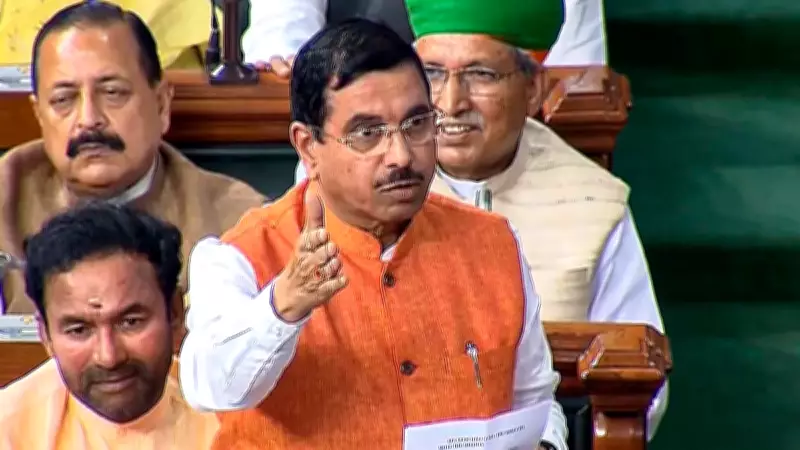
Union Minister Pralhad Joshi Accuses Congress of 'Son Stroke' During UPA Era
Union Minister Pralhad Joshi has launched a sharp critique against the Congress party, asserting that the previous United Progressive Alliance (UPA) government was severely impacted by what he termed as 'son stroke'. This phrase is widely interpreted as a pointed reference to the dynastic politics and nepotism that allegedly characterized the Congress-led administration.
Joshi's Allegations on Dynastic Politics
In his remarks, Joshi emphasized that the UPA regime suffered from a lack of merit-based leadership, with key positions often being handed over to family members rather than qualified individuals. He argued that this practice of 'son stroke' undermined governance and hindered effective policy implementation, leading to widespread inefficiencies and corruption during that period.
The minister highlighted that such dynastic tendencies not only affected political appointments but also permeated various levels of administration, resulting in a system where loyalty to the family overshadowed competence and public service.

Context and Political Implications
Joshi's comments come amid ongoing political debates in India, where the Bharatiya Janata Party (BJP) has frequently accused the Congress of promoting dynastic rule. The term 'son stroke' is seen as a direct attack on the Gandhi family's dominance within the Congress party, suggesting that their influence led to the UPA's downfall and current struggles.
This criticism aligns with broader narratives in Indian politics, where issues of nepotism versus meritocracy are hotly contested, especially in the lead-up to elections and during parliamentary discussions.
Reactions and Broader Discourse
While Joshi's statements have sparked controversy, they reflect a persistent theme in Indian political discourse. Analysts note that accusations of dynastic politics are not new, but Joshi's use of the term 'son stroke' adds a vivid dimension to the critique, potentially resonating with voters concerned about transparency and accountability in governance.
- The allegations underscore the ongoing rivalry between the BJP and Congress.
- They highlight debates over political reform and anti-dynasty measures in India.
- Such comments may influence public perception ahead of future electoral battles.
Overall, Pralhad Joshi's remarks serve to reinforce the BJP's stance against dynastic politics while putting pressure on the Congress to address internal leadership issues. As political tensions continue, this discourse is likely to remain a focal point in India's democratic landscape.






