Congress Leaders Rally Against MGNREGA Repeal, Invoke Farm Law Protests
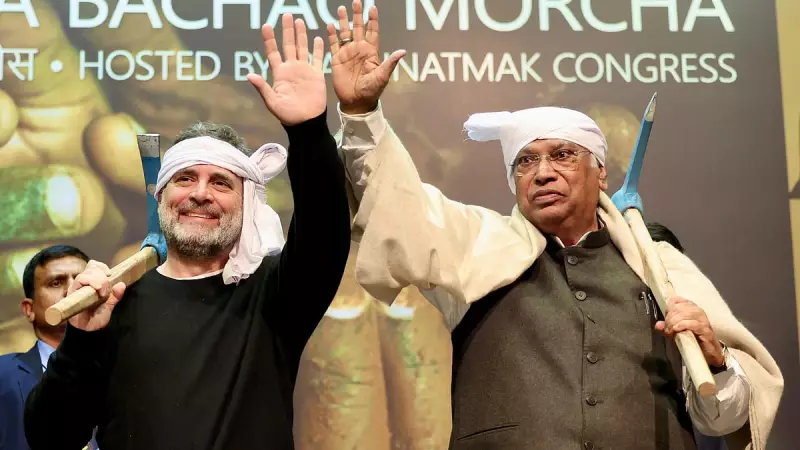
In a significant political development, senior Congress leaders Rahul Gandhi and Mallikarjun Kharge have launched a united front against the government's move to repeal the Mahatma Gandhi National Rural Employment Guarantee Act (MGNREGA). The leaders have drawn direct parallels with the contentious farm laws, asserting that the party will continue its struggle until the new Act is withdrawn and MGNREGA is fully restored.
Strategic Political Positioning
The Congress party's stance represents a calculated political maneuver aimed at consolidating opposition forces and mobilizing public sentiment. By invoking the memory of the farm law protests, which saw widespread farmer agitation across several states, the party seeks to frame the MGNREGA repeal as another instance of anti-poor policy-making. This strategic positioning is designed to resonate with rural constituencies and labor groups who have historically benefited from the employment guarantee scheme.
Leadership Statements and Demands
Rahul Gandhi, in his public statements, emphasized that the Congress would not relent in its opposition to what he termed "the dismantling of social security nets." He highlighted how MGNREGA has served as a crucial economic lifeline for millions of rural households, particularly during periods of agricultural distress and economic downturns. Mallikarjun Kharge echoed these sentiments, stressing that the party's fight would persist through parliamentary debates, public demonstrations, and legal channels if necessary.

- Immediate withdrawal of the new Act that seeks to replace MGNREGA
- Complete restoration of the original MGNREGA framework with all its provisions
- Assurance of uninterrupted funding for rural employment generation
- Transparent consultation with stakeholders before any future modifications
Historical Context and Political Implications
The reference to farm laws is particularly significant given their eventual repeal following sustained protests. This historical precedent provides the Congress with a rhetorical framework to argue that similar public pressure can force policy reversals. The timing of this opposition push, coming in early 2026, suggests preparation for upcoming electoral battles where rural welfare schemes traditionally feature prominently in political discourse.
Political analysts observe that this unified stance helps the Congress project itself as the principal defender of welfare economics, contrasting with what they characterize as the ruling party's neoliberal tendencies. The MGNREGA issue also allows the opposition to bridge urban-rural divides within its support base, creating a cohesive narrative around social justice and economic equity.
Broader Policy Debate
Beyond immediate political posturing, the controversy touches upon fundamental questions about India's social security architecture. Supporters of MGNREGA argue that it represents one of the world's largest public works programs, providing crucial income support while creating rural infrastructure. Critics have questioned its implementation efficiency and fiscal sustainability, though most agree on its importance during economic crises.
The Congress leadership's firm position ensures that any changes to the employment guarantee framework will face rigorous parliamentary scrutiny and public debate. As the political standoff develops, all eyes will be on whether the government modifies its approach or maintains its course, and how other opposition parties align themselves on this economically sensitive issue.