The Indian National Congress has launched a sharp, cinematic attack on the Narendra Modi-led government, employing a clever acronym inspired by a Bollywood classic. The party has accused the ruling Bharatiya Janata Party (BJP) of following a 'DDLJ' strategy, which stands for 'Distort, Defame, Lie, and Justify'.
The Genesis of the 'DDLJ' Attack
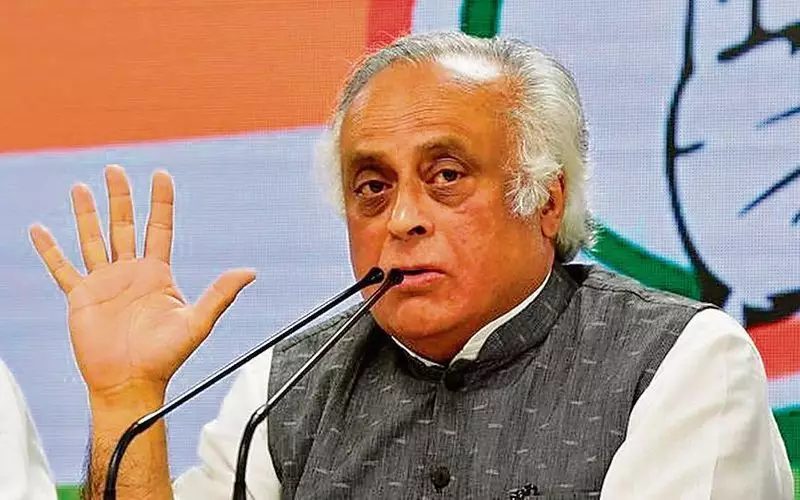
This political salvo was fired by senior Congress leader and Rajya Sabha MP, Jairam Ramesh. The critique came in direct response to the government's and the BJP's reaction to the recent electoral bond data released by the State Bank of India (SBI). The data, made public under Supreme Court orders, has ignited a fierce political storm regarding political funding and corporate influence.
Ramesh, known for his pointed commentary, took to social media to articulate the Congress's position. He stated that the BJP's standard operating procedure when confronted with uncomfortable facts or allegations is a four-step playbook. First, they Distort the narrative. Second, they Defame the individuals or institutions raising questions. Third, they outright Lie to the public. And finally, they attempt to Justify their actions with flawed logic.

Linking the Acronym to Electoral Bond Controversy
The context for this attack is deeply rooted in the ongoing electoral bonds controversy. The Congress and other opposition parties have alleged that the electoral bonds scheme was a 'legalized corruption mechanism' that allowed the BJP to receive vast sums of money from corporations, often in exchange for favorable government policies or to avert investigative actions.
Jairam Ramesh specifically targeted the BJP's defense following the data disclosure. He accused the ruling party of trying to distort the clear evidence showing large corporate donations to the BJP via electoral bonds. Furthermore, he alleged that the BJP was defaming the opposition for highlighting these issues, lying about the nature of the transactions, and then attempting to justify the entire scheme as a measure for transparent political funding—a claim the Supreme Court has now struck down.
The Congress's attack cleverly uses the iconic Bollywood film 'Dilwale Dulhania Le Jayenge' (DDLJ), a cultural touchstone for millions of Indians, to create a memorable and biting critique. This strategy is designed to make a complex political accusation relatable and sticky in public discourse.
Political Repercussions and the Road Ahead
This 'DDLJ' jab is more than just a witty acronym; it represents a concerted effort by the Congress to frame the political narrative in the lead-up to the general elections. By packaging their allegations into a simple, viral-friendly term, they aim to persistently challenge the government's credibility on the issue of corruption and crony capitalism.
The electoral bond data has provided significant ammunition to the opposition, and the Congress is leveraging it to question the ethical foundation of the Modi administration. The party is pushing the message that the government's actions follow a predictable pattern of obfuscation and aggression when faced with accountability.
As of now, the BJP has not officially responded to this specific 'DDLJ' characterization. However, party leaders have consistently defended the electoral bonds scheme in the past, stating it was introduced to bring transparency and clean up political funding from unaccounted cash. The government had also previously argued in court that the scheme protected donor anonymity.
The battle lines are now clearly drawn. The Congress, armed with data from the SBI disclosure, plans to keep the heat on the government. The effectiveness of this 'DDLJ' frame will be tested in the coming days as it permeates political debates, social media discussions, and public rallies. This episode underscores the increasingly aggressive and creative rhetorical warfare defining Indian politics today, where even Bollywood nostalgia is weaponized for political point-scoring.