Congress Sounds Alarm Over Indo-US Trade Deal's Impact on Indian Farmers
In a significant political development, the Congress party has not ruled out launching a nationwide movement against the proposed Indo-US trade agreement. The party has also formally accepted Home Minister Amit Shah's challenge for a public debate on the contentious issue. At the heart of Congress's opposition is a stark warning about the potential devastation to India's agricultural sector.
Staggering Production Disparities Highlighted
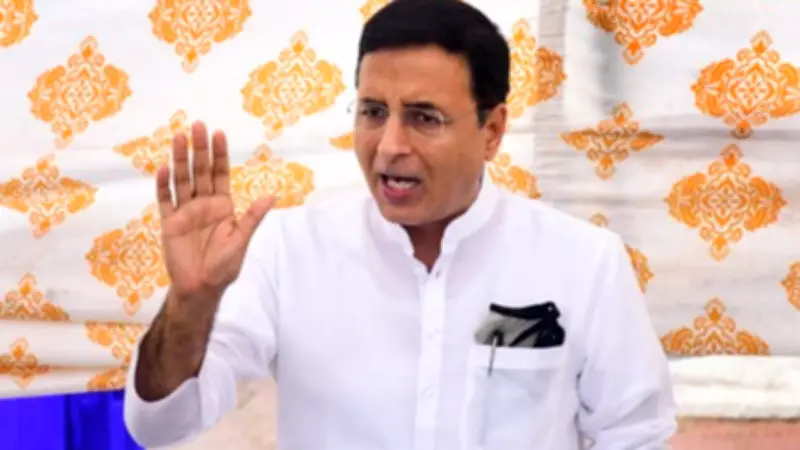
Addressing a press conference, AICC spokesman and MP Randeep Surjewala presented compelling data illustrating the massive scale of US agricultural production compared to India's output. The numbers reveal a concerning imbalance that could flood Indian markets with cheaper imports. According to Surjewala, India produces 43 million metric tonnes of maize annually, while the United States produces a staggering 425 million MT. Similarly, India's annual sorghum output stands at 5.2 million MT, significantly lower than the US production of 8.7 million MT. The soybean production gap is even more dramatic, with India producing 15.3 million tonnes compared to America's 120 million tonnes.
Dire Consequences for Farmers Across India
Surjewala argued that the United States has been actively seeking markets for its vast surplus of these grains, and the Modi government has effectively opened India's doors by agreeing to import DDG (processed maize), soya oil, and red sorghum. "What will the farmers of Central India, northern India, western India, and some southern states do when these imports come at reduced or zero tariffs?" he questioned, highlighting the vulnerability of agricultural communities nationwide.

The Congress MP characterized the trade agreement as "a one-sided and unequal agreement" that fundamentally undermines India's sovereignty and domestic economic priorities. He emphasized that the commitment to remove "non-tariff barriers" could potentially lead to India allowing imports of genetically modified agricultural products, while simultaneously weakening crucial procurement mechanisms and subsidies that support farmers.
Congress Accepts Debate Challenge on Trade Terms
In response to Home Minister Amit Shah's public challenge regarding the trade deal, Surjewala announced that Congress president Mallikarjun Kharge has nominated him to debate the specifics of the agreement with the minister and the BJP. The Congress party has urged the ruling party to decide on a suitable time and venue for this crucial discussion, framing it as an opportunity to publicly scrutinize the deal's implications.
Cotton Sector Faces "Double Whammy" Threat
Surjewala identified cotton as another critical area of concern, particularly following Commerce Minister Piyush Goyal's remarks about India potentially receiving Bangladesh-type zero-tariff access to US textile markets in exchange for importing American cotton. He pointed out that India currently has a surplus cotton production, which it both exports to Bangladesh and uses to satisfy robust domestic demand.
Importing cotton from the United States would directly hurt cotton-producing farmers across multiple states, including Maharashtra, Gujarat, Madhya Pradesh, Rajasthan, Haryana, Punjab, Andhra Pradesh, Karnataka, and Telangana. Furthermore, Surjewala warned that Bangladesh, which currently sources approximately 50% of its cotton requirements from India, would likely halt these imports and instead procure cotton from the United States under the new trade terms. "This is called a double whammy," he remarked, describing how Indian farmers would face competition both domestically and in key export markets.
The Congress party's strong stance sets the stage for a heated political confrontation over agricultural policy and international trade relations, with millions of farming livelihoods potentially hanging in the balance.