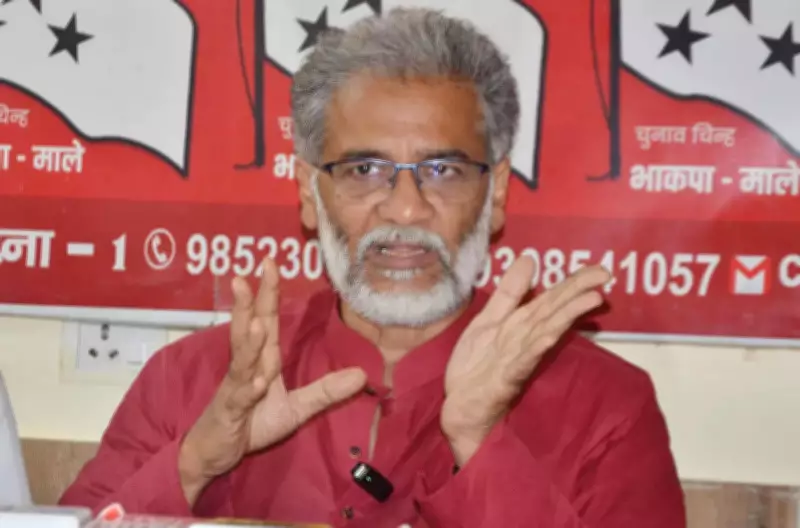
In a strongly worded response from Patna, CPI(ML) general secretary Dipankar Bhattacharya and the party's central committee have vehemently criticized the Supreme Court's recent observation and order that has temporarily halted the implementation of the UGC Equity Rules across universities and colleges in India. The court's decision, which described the rules in their current form as potentially divisive for society, has sparked significant controversy and debate.
Condemnation of Supreme Court's Stance
The CPI(ML) leadership expressed deep concern over the Supreme Court's characterization of the UGC Equity Rules as reactionary and regressive obstacles to achieving a casteless society. Bhattacharya emphasized that caste continues to exert a powerful influence on social structures in the country, shaping everyday realities for millions of marginalized individuals.
Addressing Campus Discrimination
Bhattacharya pointed out that when the University Grants Commission formulated these equity rules—despite their perceived inadequacies and weaknesses—they were intended to tackle the pervasive issue of caste-based discrimination on educational campuses. He argued that dismissing these rules undermines efforts to create safer and more inclusive academic environments.

Tragic Cases of Student Suicides
Recalling the heartbreaking deaths of students such as Rohith Vemula, Payal Tadvi, and Darshan Solanki, Bhattacharya highlighted how caste-based discrimination continues to drive students from marginalized communities toward suicide. He lamented that none of the courts have treated these tragic incidents as reactionary or acknowledged them as serious matters of public concern, reflecting a gap in judicial sensitivity.
CPI(ML) Central Committee's Statement
In an official statement released on Friday, the CPI(ML) central committee described the Supreme Court's observation as narrow and indicative of the thought process of the privileged. The committee noted that the court had termed the UGC Equity Rules unclear and prone to misuse, questioning whether they could hinder progress toward a casteless social order.
The statement asserted, "The reality of caste and racial discrimination is neither imaginary nor a thing of the past. It remains a cruel and pervasive feature of our institutions and society at large." This underscores the party's firm belief that systemic biases persist and require proactive measures.
Alarming Rise in Discrimination Complaints
Citing data from the UGC, the CPI(ML) revealed a staggering 118% increase in complaints related to caste-based discrimination in universities and colleges between 2019 and 2024. This statistic highlights the growing urgency to address such issues through robust regulatory frameworks rather than suspending existing rules.
The party's critique from Patna adds to the ongoing national discourse on social justice, equity, and the role of judicial interventions in shaping educational policies. It calls for a more nuanced understanding of caste dynamics and stronger protections for vulnerable students in India's higher education system.