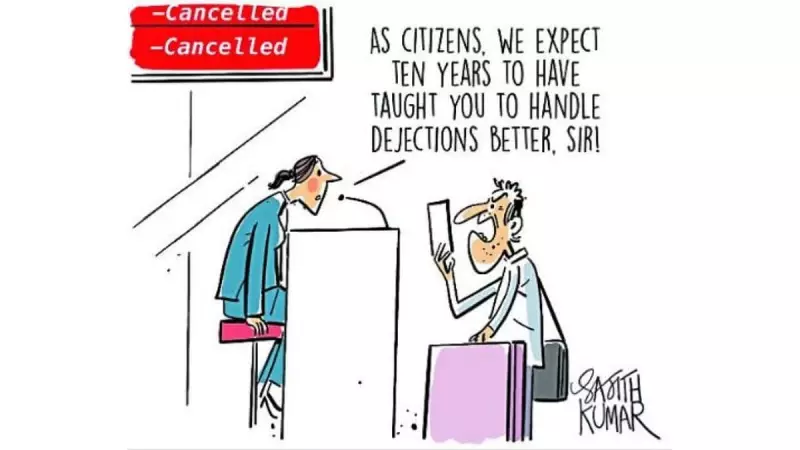
A recent editorial cartoon published by Deccan Herald has delivered a pointed and humorous critique of the ongoing political culture of defections in India. The artwork, sharp in its visual commentary, uses satire to highlight the often cynical handling of lawmakers who switch parties, a phenomenon colloquially known as "horse-trading."
The Art of Political Satire
Editorial cartoons have long served as a powerful medium for social and political commentary, distilling complex issues into a single, impactful image. The Deccan Herald cartoon in question continues this tradition. It focuses on the mechanics and consequences of political defections, a subject that has repeatedly stirred controversy and public debate. The cartoonist employs classic satirical tools—exaggeration and irony—to question the ethical and democratic implications of elected representatives frequently changing their allegiance.
The central theme revolves around how these defections are managed, facilitated, and often rewarded within the political ecosystem. Instead of a dry editorial, the cartoon presents the issue in a manner that is immediately accessible and thought-provoking for the reader, prompting reflection on the state of representative democracy.
Decoding the Visual Commentary
While the specific visual elements are the creation of the cartoonist, the message is clear and universally recognizable in the Indian political context. The cartoon likely depicts the ease with which political loyalties are traded, juxtaposing the gravity of such actions with their casual treatment by party machineries. It satirizes the disconnect between the principles of stable governance and the reality of shifting alliances driven by opportunism.
Such artwork implicitly questions the effectiveness of anti-defection laws and the moral compass of the political class. By choosing to comment through satire, Deccan Herald amplifies the absurdity often inherent in these situations, making a critical statement about the need for greater political integrity and accountability.
Broader Implications for Indian Democracy
This piece of editorial art is not just a joke; it is a mirror held up to a persistent flaw in the system. Frequent defections undermine the voter's mandate, destabilize governments, and reduce politics to a game of numbers rather than a contest of ideology or governance. The cartoon serves as a cultural checkpoint, reminding the public and politicians alike of the erosion of trust this behavior causes.
The satire underscores several key concerns:
- The trivialization of the electoral mandate.
- The operational challenges in enforcing anti-defection laws.
- The perception of politics as a career of convenience rather than service.
In an era of intense political polarization, such cartoons play a vital role in fostering critical public discourse. They cut through partisan rhetoric and present a shared, often uncomfortable, truth in a palatable format.
Ultimately, the Deccan Herald cartoon is a call for introspection. It challenges political parties to handle defections—and more importantly, the principles they represent—with the seriousness they deserve. For the public, it reinforces the importance of valuing consistency and integrity in their representatives, beyond short-term political gains. As long as the spectacle of turncoats continues, the satirical pen of the cartoonist will remain a necessary and potent tool for democratic accountability.