

India Announces 15% Defence Budget Hike to ₹7.85 Lakh Crore in Post-Operation Sindoor Budget
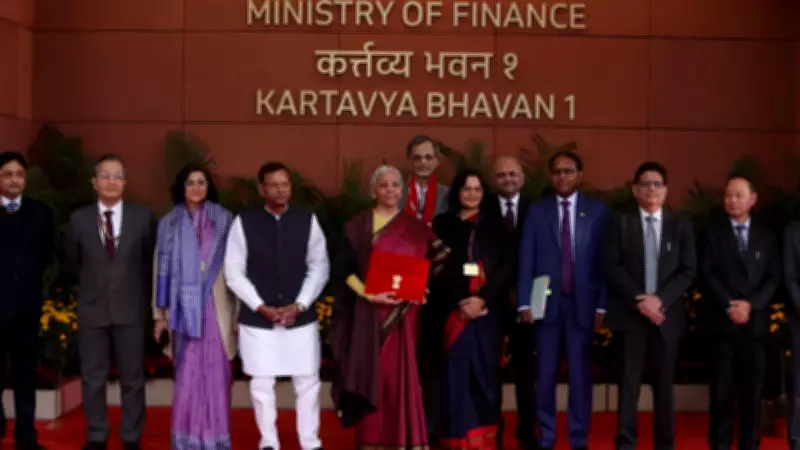
In a significant move following Operation Sindoor, the Indian government has substantially increased its defence expenditure for the upcoming fiscal year. Finance Minister Nirmala Sitharaman announced a 15 per cent hike in the overall defence budget, raising it to ₹7.85 lakh crore for 2026-27. This marks the first budget announcement after India's military operation in May last year aimed at dismantling terror infrastructure in Pakistan.
Major Boost to Defence Modernisation and Capital Outlay
The budget reveals an even more substantial increase in the defence modernisation budget, which has been raised by nearly 22 per cent compared to previous allocations. The defence capital outlay for 2026-27 stands at ₹2.19 lakh crore, up from ₹1.8 lakh crore in 2025-26. This significant jump in capital budget allocations indicates the government's plans to sign multiple high-value contracts in the upcoming financial year.
Among the various allocations, the highest capital provisions have been earmarked for aircraft and aero-engines at ₹0.63 lakh crore for 2026-27, representing a substantial increase from ₹0.48 lakh crore in the previous fiscal year. Interestingly, the revised estimates for this category had already jumped to ₹0.72 lakh crore in 2025-26, reflecting ongoing strategic priorities.

Strategic Contracts and International Collaborations
The enhanced budget allocation points toward several major defence contracts in the pipeline. These include the anticipated procurement of 114 Rafale jets from French manufacturer Dassault Aviation for the Indian Air Force, which would involve advance payments of up to 10 per cent of the contract value at the outset.
Additionally, India's Defence Research and Development Organisation (DRDO) is collaborating with French defence major Safran to co-develop an aero engine for the indigenous Advanced Medium Combat Aircraft (AMCA), currently under development. State-owned Hindustan Aeronautics Limited and US defence major General Electric (GE) Aerospace had signed a pact two years ago to produce fighter jet engines and are set to begin commercial negotiations soon.
An Inter-Governmental Agreement (IGA) between India and France, signed in April last year for the procurement of 26 Rafale Aircraft (22 Single-Seater and four Twin-Seater) for the Indian Navy, has also contributed to the increased allocations.
Operation Sindoor's Impact and Emergency Procurements
Senior officials have indicated that the rise in capital allocations reflects numerous emergency procurements undertaken following Operation Sindoor last year. According to defence sources, three primary factors have driven this increase:
- Milestone payments for contracts signed in previous financial years
- Substantial emergency procurements during the ongoing fiscal year
- New contracts anticipated for the upcoming fiscal year, many awaiting Cabinet Committee on Security (CCS) approval
The Rashtriya Rifles has also seen a significant jump in capital allocations for 2026-27, rising to ₹255 crore from ₹150 crore in the previous financial year. This increase aims to strengthen the force with additional resources, weapons, and equipment following Operation Sindoor.
Sustenance Budget and Domestic Procurement Focus
With the government maintaining that Operation Sindoor is still ongoing, preparations include stocking the military with additional platforms, fuel, ammunition, and critical spares. Accordingly, ₹3.6 lakh crore has been earmarked as the Indian military's sustenance budget for 2026-27, representing a 17 per cent increase from the previous fiscal.
The government has allocated ₹1.39 lakh crore, equivalent to 75 per cent of the Capital Acquisition budget, for procurement from domestic industries during FY 2026-27. This emphasis on domestic defence manufacturing aligns with the government's broader self-reliance initiatives.

Additional Defence Allocations and Strategic Projects
The defence budget includes several other significant allocations:
- Defence pensions at ₹1.7 lakh crore for disbursing monthly pensions to over 34 lakh pensioners through SPARSH and other authorities
- Research and development outlay increased to ₹0.17 lakh crore from ₹0.14 lakh crore in the previous fiscal
- Border Roads Organisation (BRO) allocation enhanced to ₹7,394 crore from ₹7,146.50 crore for strategically significant projects including tunnels, bridges, and airfields
According to the Ministry of Defence, upcoming capital acquisition projects will equip the Armed Forces with next-generation fighter aircraft, smart weapons, ships, submarines, Unmanned Aerial Vehicles, drones, and specialist vehicles. The total defence budget represents 14.67 per cent of the Central Government expenditure, making it the highest allocation among all ministries.
The Ministry of Defence statement noted that during 2025-26, up to December 2025, it concluded contracts worth ₹2.10 lakh crore and has given Acceptance of Necessity approval for more than ₹3.50 lakh crore. These developments underscore India's continued focus on strengthening its defence capabilities in the post-Operation Sindoor security landscape.





