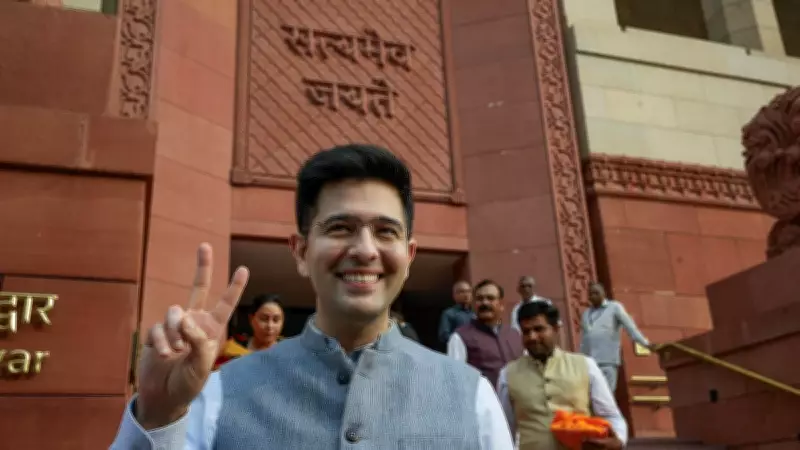
The Delhi High Court on Tuesday observed that there is a thin line between defamation and political criticism while hearing a plea by Aam Aadmi Party (AAP) leader Raghav Chadha seeking the removal of certain social media posts targeting him. Senior advocate Rajiv Nayar, representing Chadha, argued that the posts contained profane content, including allegations that the politician had 'sold himself away for money'.
Court's Observation
A bench of Justice Subramonium Prasad noted that while political figures are subject to scrutiny and criticism, there must be a distinction between legitimate criticism and defamatory statements. The court stated that the line between the two is often blurred, especially in the context of social media where unverified and malicious content can spread rapidly.
Arguments Presented
Senior advocate Rajiv Nayar submitted that the posts in question were not only defamatory but also used abusive language, which went beyond the bounds of acceptable political discourse. He emphasized that the posts falsely portrayed Chadha as corrupt and untrustworthy, causing irreparable harm to his reputation. Nayar requested the court to direct the removal of the posts and restrain the respondents from publishing similar content in the future.

On the other hand, the respondents argued that the posts were a form of political criticism and protected under the right to free speech. They contended that Chadha, as a public figure, must tolerate a higher degree of scrutiny and that the posts did not cross the line into defamation.
Legal Framework
The court referred to the legal principles governing defamation and free speech in India. It noted that while Article 19(1)(a) of the Constitution guarantees freedom of speech and expression, this right is subject to reasonable restrictions under Article 19(2), which includes defamation. The court highlighted that the test to determine whether a statement is defamatory or a fair comment is whether it is made in good faith and without malice.
Social Media's Role
The bench also commented on the role of social media in amplifying defamatory content. It observed that social media platforms often become a breeding ground for unverified allegations, which can cause significant damage to an individual's reputation. The court stressed the need for a balanced approach that protects both the right to free speech and the right to reputation.
Next Hearing
The court has scheduled the next hearing for June 4, 2026, and directed the respondents to file their replies. Until then, the court has refrained from passing any interim order, stating that it needs to examine the matter in greater detail.
The case has drawn attention to the growing trend of political figures seeking legal recourse against social media posts. It raises important questions about the boundaries of free speech in the digital age and the responsibility of social media platforms in curbing defamatory content.