

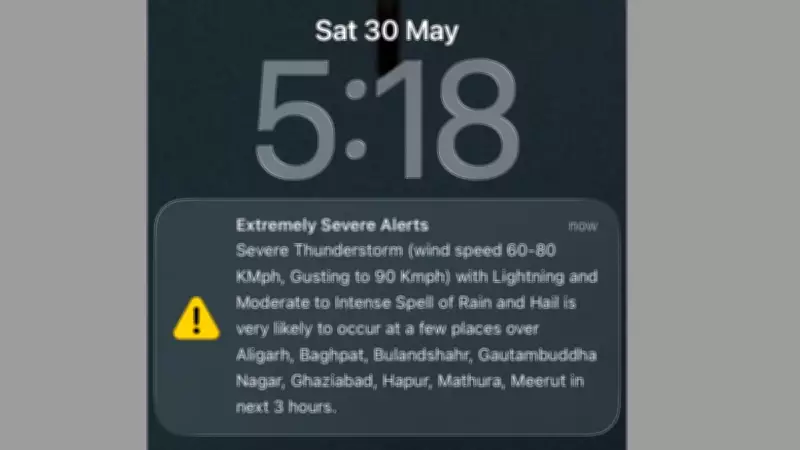
On May 30, 2026, residents of Delhi-NCR experienced a sudden buzz on their mobile phones, accompanied by a loud siren and a message warning of an 'extremely severe' thunderstorm. The alert, which appeared on both Android and iOS devices, caused momentary panic among many. But why did this happen, and what does it mean?
What Was the Alert About?
The alert was issued by the Indian Meteorological Department (IMD) in collaboration with the National Disaster Management Authority (NDMA). It warned of thunderstorms accompanied by heavy rain, strong winds, and possible hail in the Delhi-NCR region. The message urged residents to stay indoors and avoid unnecessary travel.
How Does the Emergency Alert System Work?
The government uses a system called Cell Broadcast for emergency alerts. This technology allows authorities to send messages to all mobile phones within a specific geographic area, regardless of network congestion. The alerts are not dependent on internet connectivity and work even on basic phones. When an alert is sent, phones emit a distinct sound and vibration, even if set to silent mode.

Why Was the Alert Sent?
The IMD upgraded the warning to 'extremely severe' based on radar and satellite data indicating intense thunderstorm activity. The alert aimed to ensure public safety by giving people time to take precautions. Similar alerts have been used in the past for cyclones, floods, and other natural disasters.
Public Reaction
Many residents took to social media expressing surprise and concern. Some reported that the alert woke them up from sleep, while others appreciated the timely warning. However, a few complained about the lack of clarity in the message, with some not understanding the severity level.
Government's Response
Officials clarified that the alert system is a critical tool for disaster management. They urged citizens to take such warnings seriously and follow safety guidelines. The NDMA also announced plans to improve the messaging to include more specific instructions.
What Should You Do When You Receive Such Alerts?
- Read the message carefully and understand the instructions.
- If advised to stay indoors, avoid going out until the threat passes.
- Keep emergency supplies like flashlights and first aid kits handy.
- Stay tuned to local news for updates.
The incident highlights the importance of technology in disaster preparedness. While the sudden buzz may be startling, it is a small price to pay for safety.






