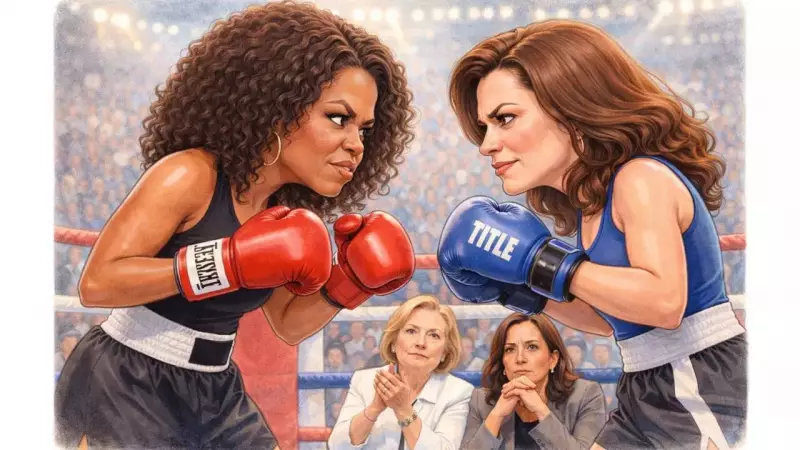
For nearly ten years, the Democratic Party has approached electoral defeat with a sense of fragility and embarrassment, often choosing to sidestep thorough analysis rather than confront uncomfortable truths directly. This pattern of avoidance persisted until two influential women within the party articulated perspectives with a clarity that has long been missing from Democratic discourse.
The Clash of Perspectives: Confronting Bias vs. Emphasizing Strategy
Michelle Obama voiced what numerous Democrats have privately believed but seldom acknowledged publicly during election cycles. She stated plainly, "There are men out there that were not going to vote for a woman. Let's just be real about it and let's put that on the table." Her remarks draw from concrete electoral history rather than abstract theory, referencing the painful losses of Hillary Clinton in 2016 and Kamala Harris in 2024—both contests that concluded with victories for Donald Trump.
From Obama's viewpoint, sexism does not explain every aspect of these defeats, but it remains a significant enough factor to make denial an untenable position for the party.

Whitmer's Counterargument: Rejecting Fatalism
In contrast, Gretchen Whitmer firmly rejected this conclusion, asserting that the United States is not trapped in a moment of entrenched prejudice. She argued, "I think America is ready for a woman president." Whitmer's stance is not a denial of bias's existence but rather a rejection of the fatalism that can emerge from focusing solely on it.
Her perspective is grounded in the observable reality of contemporary electoral politics, where women continue to secure governorships, Senate seats, and statewide offices across the nation. This trend suggests that voters are not broadly rejecting female leadership as a category but are instead responding to individual candidates, their campaigns, and specific strategic contexts.
The Broader Context: A Party Avoiding Internal Confrontation
This apparent disagreement between two prominent Democratic voices represents a delayed reckoning over how the party explains its own electoral losses and the extent of responsibility it is willing to accept. Since Barack Obama departed the White House, the Democratic Party has increasingly prioritized coalition management over ideological clarity, often smoothing over internal disagreements rather than resolving them.
The 2016 decision to effectively clear the field for Hillary Clinton at the expense of Bernie Sanders left numerous questions unanswered. The subsequent rise of Donald Trump pushed Democrats into a prolonged defensive posture, focused on protecting democratic norms and institutions rather than critically examining their own failures.
The consequence has been a party that reacts frequently to external events but engages in deep reflection only rarely—a pattern that resurfaced prominently during the 2024 election cycle.
Analyzing the 2024 Loss: The Case of Kamala Harris
Kamala Harris did not lose the presidential race due to a lack of experience or qualifications. Instead, her campaign struggled because many voters found it difficult to grasp what she represented during a period marked by economic anxiety and widespread political frustration.
Her campaign messaging oscillated between presenting itself as a continuation of the current administration's work and signaling a need for course correction. This ambiguity left her message blurred rather than broadened, failing to resonate clearly with the electorate.
At a time when inflation, cost-of-living pressures, and border security dominated voter priorities, Harris communicated in detailed policy terms while many citizens sought a clearer sense of direction and conviction. Additionally, she carried the weight of an administration that a significant portion of the electorate viewed with uncertainty, without fully owning its record or decisively distancing herself from it.
While sexism undoubtedly played a role in shaping public perceptions, strategic decisions and message clarity were equally critical factors. Ignoring these elements only postpones necessary lessons for the party.

The Significance of the Debate
The exchange between Michelle Obama and Gretchen Whitmer holds substantial importance for the Democratic Party's future. Obama insists that Democrats must confront voter bias without resorting to comforting illusions, while Whitmer emphasizes that the party must address its own strategic shortcomings without retreating into narratives of inevitability.
This dialogue forces Democrats to engage in the serious internal confrontation they have largely avoided in the post-Obama era, potentially paving the way for more honest assessments and effective strategies in upcoming elections.