

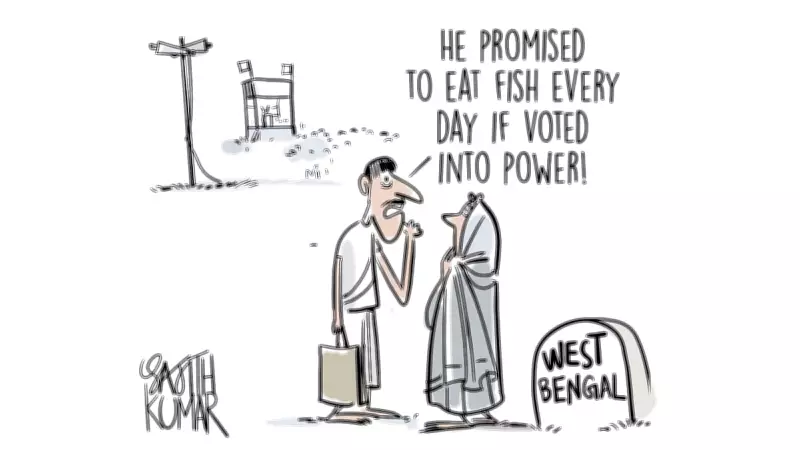
DH Toon: A Promise to Eat Fish - A Satirical Commentary on Political Promises
In a recent publication by Deccan Herald, a satirical cartoon titled "A Promise to Eat Fish" has captured the attention of readers, offering a humorous yet sharp critique of political rhetoric. This cartoon, part of the newspaper's opinion section, uses visual metaphor to comment on the often extravagant and unfulfilled promises made by politicians during election seasons. The imagery depicts a politician making a vow to eat fish, symbolizing the absurd lengths to which candidates might go to win public favor, while highlighting the public's growing skepticism toward such pledges.
The Essence of the Cartoon's Message
The cartoon cleverly employs the act of eating fish as a stand-in for political commitments, suggesting that these promises can be as fleeting or as trivial as a meal. By focusing on this simple, everyday action, the artist underscores how political discourse sometimes devolves into superficial gestures rather than substantive policy discussions. This satirical approach resonates with audiences who are weary of empty rhetoric and seek more accountability from their leaders.
Context and Relevance in Current Politics
This piece emerges at a time when political campaigns are increasingly marked by bold declarations and grand assurances, often without clear plans for implementation. The cartoon taps into a broader public sentiment of disillusionment, where voters question the authenticity of electoral promises. It serves as a reminder of the importance of critical engagement with political messaging, encouraging citizens to look beyond the surface and demand concrete actions from their representatives.

Impact on Public Discourse
Satirical cartoons like this one play a vital role in shaping public opinion by using humor to expose underlying truths. They provide a accessible medium for critiquing power structures and fostering dialogue about governance. In this case, "A Promise to Eat Fish" not only entertains but also prompts reflection on the nature of political trust and the need for transparency in democratic processes.
Conclusion: A Call for Authenticity in Politics
Ultimately, the Deccan Herald cartoon serves as a poignant commentary on the state of political promises, urging both politicians and the public to prioritize sincerity over spectacle. As elections continue to be a focal point of democratic life, such satirical works remind us of the value of holding leaders accountable and the power of art in challenging the status quo.






