

Dhaka Erupts in Violent Anti-Yunus Protests Over Pay and Death Probe
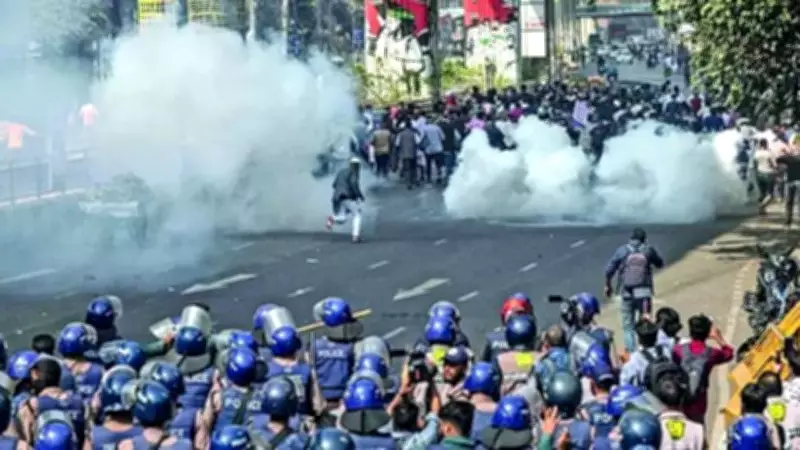
Violent anti-government protests have returned to the streets of Dhaka, Bangladesh, but this time they are directly targeting the interim administration led by Nobel laureate Muhammad Yunus. The demonstrations, which turned chaotic, saw hundreds of government employees and political activists clash with police forces in the capital city.
Protests Over Pay Scale and Political Demands
Hundreds of government employees took to the streets, demanding the implementation of the Ninth National Pay Scale. Their slogans echoed deep frustrations, with chants such as "there is no rice in the stomach, development is only in words" and "injustice will be washed away with blood" resonating through Dhaka. Police responded with tear gas, water cannons, and sound grenades to disperse the crowds, leading to intense confrontations.
Clashes Outside Yunus's Residence
The most severe clashes occurred outside the official residence of Chief Adviser Muhammad Yunus, known as 'Jamuna'. This marked the first protest directly targeting Yunus since he assumed leadership of the interim administration. At least 40 protesters were injured in this location as security personnel used lathi charges against government employees who broke through barricades.

Political Alliance with Inqilab Moncho
The protests gained momentum when members of Inqilab Moncho, a political party, joined the government employees. Inqilab Moncho has been vocal against Yunus following the death of its co-founder, Sharif Osman Hadi, a radical Islamist and critic of India. Hadi died on December 18, six days after being shot in the head in Dhaka. The party's protesters are demanding an impartial United Nations-led investigation into his death, adding a political dimension to the pay scale demands.
Embarrassment Ahead of Elections
These protests have emerged as a significant embarrassment for the Yunus administration, especially with elections looming. The administration had previously noted that "many foreign journalists and international observers have already arrived in the country" and appealed to citizens to "demonstrate the highest level of responsibility and cooperation to ensure a peaceful election". The violent scenes threaten to undermine these efforts and cast a shadow over the electoral process.
Broader Implications for Bangladesh
The convergence of economic grievances, such as the pay scale issue, with political demands like the probe into Hadi's death, highlights the complex challenges facing Bangladesh. The involvement of Inqilab Moncho, with its anti-India stance, adds layers of regional and international scrutiny. As tensions escalate, the interim government faces mounting pressure to address both the immediate demands of protesters and the broader need for stability during this critical period.






