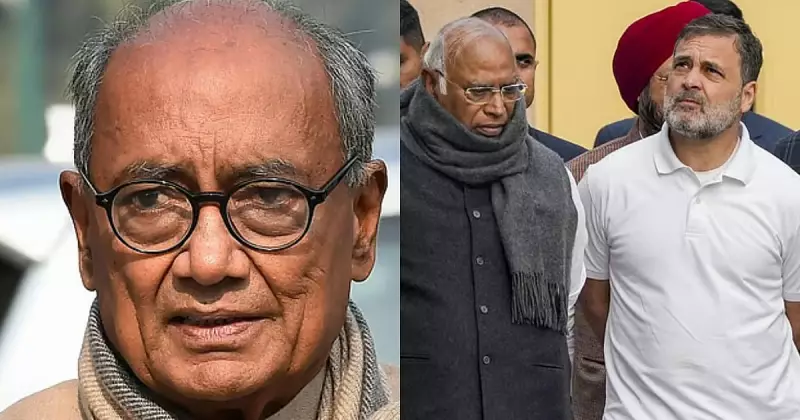
A significant political controversy erupted on Saturday, December 27, 2025, after senior Congress leader Digvijaya Singh made unexpected remarks about the Rashtriya Swayamsevak Sangh (RSS). His comments, which came just ahead of a crucial Congress Working Committee (CWC) meeting, have stirred a major row within the political landscape.
Digvijaya Singh's Unexpected Praise for RSS
In a surprising turn of events, veteran Congress politician Digvijaya Singh offered words of appreciation for the RSS, the ideological parent of the Bharatiya Janata Party (BJP). Singh acknowledged certain aspects of the RSS's organisational structure and discipline, a stance that is highly unusual for a top leader from the Indian National Congress. The remarks were made in the lead-up to a key meeting of the Congress's highest decision-making body, the CWC, adding an unexpected layer of internal debate to the party's agenda.
Rahul Gandhi's Sharp Critique of G RAM G
Simultaneously, Congress MP Rahul Gandhi launched a fierce attack on the government's G RAM G initiative. Drawing a stark parallel, Gandhi equated the policy's impact to that of the 2016 demonetisation move, calling it a "devastating attack on the states". He argued that the scheme, much like the sudden invalidation of high-value currency notes, would have severe and disruptive consequences for the financial and administrative autonomy of India's states, undermining cooperative federalism.

Political Fallout and Internal Dynamics
The juxtaposition of these two statements from senior Congress leaders on the same day has created a complex political narrative. While Singh's comments have sparked discussions about political outreach and ideological positioning, Gandhi's criticism has set the stage for a direct confrontation with the ruling dispensation over centralised policies. The timing, just before the CWC gathering, suggests these issues are likely to be hotly debated topics within the party, potentially highlighting differing strategic viewpoints on how to engage with political opponents and critique government schemes.
The developments underscore the ongoing churn within the Congress party as it seeks to redefine its strategy and messaging. The public divergence in tone between two of its most prominent figures on a single day points to the broader challenges the party faces in presenting a unified front while tackling a formidable political rival.