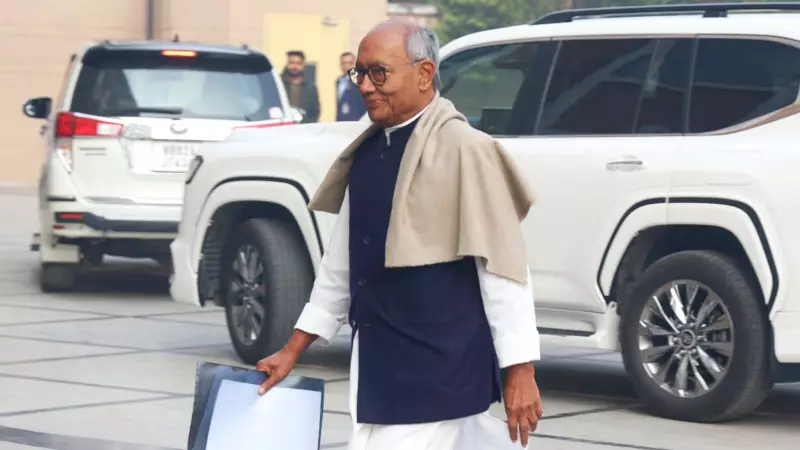
Senior Congress leader and Rajya Sabha MP Digvijaya Singh has once again landed his party in an uncomfortable position, this time by posting praise for the Rashtriya Swayamsevak Sangh (RSS) on social media. The post, made on Saturday, December 27, 2025, took many within the Congress by surprise, but for those familiar with Singh's long political career, it was another chapter in a history of stirring controversy.
A Career Marked by Controversial Remarks
Digvijaya Singh, the 78-year-old former Chief Minister of Madhya Pradesh, is known in political circles as a leader who frequently speaks his mind, often leaving the Congress leadership scrambling to control the fallout. His latest comments lauding the RSS structure and the rise of Prime Minister Narendra Modi have ignited a fresh internal debate within the party.
Singh's political ascent began in 1985 when then-Prime Minister Rajiv Gandhi appointed the 38-year-old as the head of the Madhya Pradesh Congress. A member of the former royal family of Raghogarh in Guna district, Singh has served two terms as Chief Minister and is currently a two-time Rajya Sabha MP, with his term set to end in 2026.

Past Statements That Haunt the Congress
This is far from the first instance where Singh's utterances have created a storm. In January 2023, he triggered a massive political row by casting doubts on the 2016 surgical strikes across the Line of Control (LoC). He also raised questions about the 2019 Pulwama terror attack, accusing the government of being "liars" for not presenting a parliamentary report on the martyrdom of 40 CRPF personnel.
The Bharatiya Janata Party (BJP) swiftly attacked the Congress, accusing it of being "blinded by hate" for PM Modi and insulting the armed forces. The Congress was forced to officially distance itself from Singh's remarks, with senior leader Jairam Ramesh clarifying that the views did not reflect the party's position.
Controversies During the UPA Era
Even when the Congress-led United Progressive Alliance (UPA) was in power, Singh's statements caused significant headaches for his own government. His claim that the 2008 Batla House encounter was "fake" and his demand for a judicial probe put the Manmohan Singh administration in a difficult spot.
Another major controversy erupted when Singh stated that he had spoken to Maharashtra Anti-Terrorism Squad chief Hemant Karkare on November 26, 2008, just hours before the 26/11 Mumbai terrorist attacks began. Singh claimed Karkare had told him about receiving threat calls from Hindu extremists. Karkare, who was investigating the 2008 Malegaon blasts, was killed during the Mumbai attacks.
Further, his 2010 visit to Azamgarh to investigate why the town was frequently named in terror cases was seen as an overt attempt to appeal to Muslim voters, with critics accusing him of pushing a polarising "Muslim line." His public criticism of then-Union Home Minister P. Chidambaram over anti-Naxal policy, even labeling him "intellectually arrogant," showcased his willingness to challenge his own party's top brass.
The Recurring Pattern and Its Impact
The pattern is clear: Digvijaya Singh's independent and often contrarian statements have repeatedly forced the Congress into a reactive mode, compelling it to issue clarifications or create distance. While he positions himself as a straight-talker, his comments frequently provide ammunition to the BJP and create internal friction within the Congress.
His latest praise for the RSS, the ideological parent of the BJP, has opened a new front of internal dissent, highlighting the ongoing struggle within the Grand Old Party to manage its veteran leaders while crafting a cohesive political narrative against the ruling dispensation.