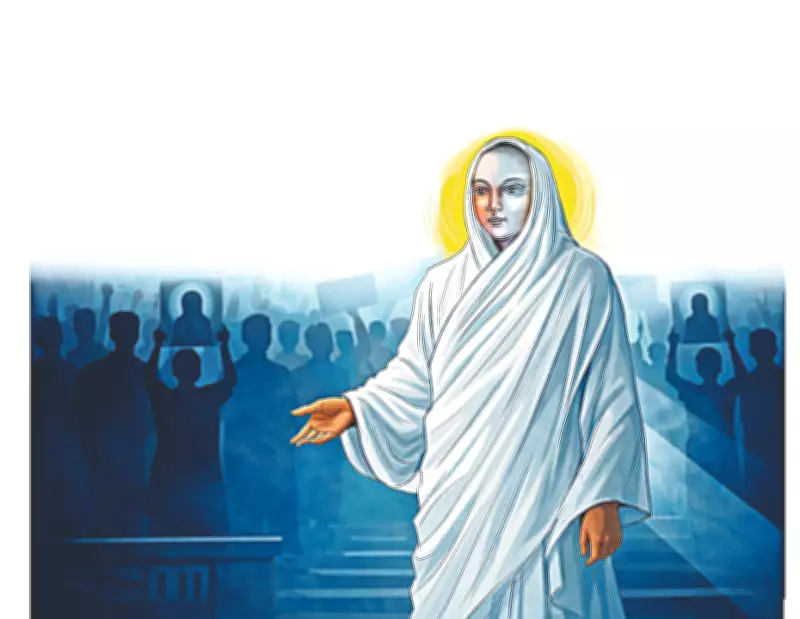
DMK Elevates Vallalar as Secular Icon in Tamil Nadu's Political Landscape
At a time when the Dravida Munnetra Kazhagam (DMK) and the Bharatiya Janata Party (BJP) are engaged in an intense ideological conflict over competing visions of nationalism, Tamil Nadu's ruling party has strategically embraced Vallalar, the 19th-century saint from Cuddalore, as a secular icon. Vallalar, known for rejecting religious rituals, challenging caste hierarchies, and preaching that the divine is omnipresent in light, has become a focal point in the DMK's political narrative.
Government Initiatives to Promote Vallalar's Legacy
Since returning to power in 2021, the DMK government has systematically worked to embed Vallalar in the public imagination as a symbol of the Dravidian model. The administration has launched a series of initiatives to honor the saint's legacy and philosophy.
- 2021: The government declared Vallalar's birth anniversary on October 5 as 'Thaniperum Karunai Naal' (Benevolence Day).
- 2022: A committee was constituted to commemorate his 200th birth anniversary.
- 2023: The Vallalar Biodiversity Reserves scheme was announced to promote environmental conservation in his name.
- 2024: Groundwork began for the Vallalar International Centre in Cuddalore, aimed at fostering global recognition of his teachings.
- 2025: The government announced that Thiruvottiyur High Road in Chennai, where Vallalar once resided, would be renamed 'Vallalar Nedunchalai'. Plans were also unveiled for an international conference dedicated to the saint.
International Conference and Historical Context
The international conference on Vallalar was held on February 15 at Ekambaranathar School in Chennai. Although Vallalar established his 'Sathiya Gnana Sabai' (hall of true wisdom) in Vadalur, which is now most closely associated with him, he lived there for less than a decade. Writer Tamilmagan, who chronicled the saint's life in his novel 'Gnaalam', notes that much of Vallalar's life was spent in Chennai.

"It was he who gave the city the moniker 'Tharumamigu Chennai' (Charitable Chennai), for its inclusiveness and warmth, which is why holding an international conference on Vallalar in Chennai is more than apt," says Tamilmagan.
Vallalar's Philosophy and Relevance to Dravidian Ideals
Vallalar's teachings align closely with the tenets of the Dravidian model. Born a Saivite, he distanced himself from the sect, opposed sanatana dharma, fought against caste hierarchy, advocated for women's empowerment, and praised Thirukkural and the Tamil language. In debates with Sankaracharya, Vallalar argued that while Sanskrit may be the 'mother tongue', Tamil is the 'father tongue'.
"These are times when clamour for rigid temple rituals is growing louder," says Tamilmagan, referencing the ongoing Karthigai Deepam controversy over traditional lamp lighting on Thiruparankundram Hill. "Vallalar found little meaning in temple ceremonies. That is why in his Sathiya Gnana Sabai there are no rituals."
Secular and Rationalist Appeal
P Saravanan, a researcher on Vallalar, explains that the saint's philosophy makes him a valuable figure for secularists and rationalists. "Vallalar comes in handy for secularists and rationalists. He made no distinctions based on caste or gender. His only differentiation was between meat-eaters and non-meat-eaters. His Sathiya Gnana Sabai imposed no restrictions. He also condemned widowhood practices such as tonsuring, removal of jewellery and forcing them to wear white sarees."
In the final decade of his life, Vallalar formally renounced Saivism and founded his own faith: Universal Fraternity. However, many people, including followers, still project him as a Saivite saint, notes V Devendran, a Tamil professor whose doctoral work examined the print history of Vallalar's writings.

Literary Contributions and Political Adoption
Vallalar composed more than 5,000 poems across six volumes collectively known as 'Thiru Arutpa'. While the first five books are devotional, the sixth volume goes beyond spirituality. "He criticises discrimination based on religion, gender and caste, and urges followers to embrace the divine as light. This book was considered revolutionary and not published until the early 20th century," says Devendran.
Rationalist leader Periyar E V Ramasamy popularized poems from the sixth book. Periyar's associate, Sami Chidambaranar, selected 100 poems and published them through Kudi Arasu publications at a low price to ensure wide accessibility. This effort influenced DMK founder C N Annadurai, who wrote in 1942: "If Vallalar re-entered this world today, he would never say a word against members of the self-respect movement. He will see Periyar as his true follower and feel happy."
Timeline of Vallalar's Life and Legacy
- 1823: Vallalar was born Ramalinga Swamigal on October 5 in Marudhur, present-day Cuddalore district, to Ramayya Pillai and Chinnammai. He displayed spiritual leanings from a young age.
- 1826: The family moved to Veerasamy Pillai Street in Chennai's Seven Wells area, where Vallalar delivered sermons at Kandhakottam temple near Parry's Corner.
- 1858: Vallalar left for Chidambaram in Cuddalore.
- 1867: He founded 'Sathiya Dharma Salai', which served free food to the poor—a practice that continues today.
- 1872: He established Sathiya Gnana Sabai, a space without idols or rituals.
- 1874: On January 30, Vallalar disappeared from a locked room at Siddhi Valagam in Mettukuppam.
- 2007: The DMK government released a stamp in his honor.
Philosophical Core and Enduring Impact
Vallalar's philosophy centered on 'Jeevakarunyam' (compassion for all beings) and 'Arutperum Jothi' (the eternal light of grace). His notable works include 'Thiru Arutpa', 'Manumurai Kanda Vasagam', and 'Jeeva Karunya Ozhukkam'. One of his most cited lines, "Vaadiya payirai kandapothellam vaadinen" (I would wither on seeing crops wither for want of water), reflects his deep empathy for all life forms.
Devendran concludes that while Vallalar did not have a disciple like Vivekananda to propagate his message globally, government efforts—such as instituting university chairs, naming schemes after him, and publishing authoritative editions of his works—can introduce his teachings to younger generations, ensuring his legacy endures in Tamil Nadu's cultural and political discourse.