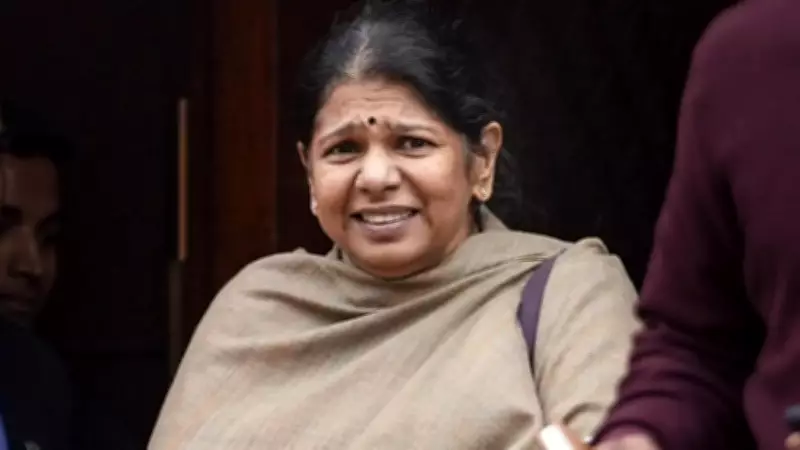
NEW DELHI: The ruling party of Tamil Nadu, the Dravida Munnetra Kazhagam (DMK), has once again voiced strong objections to the perceived imposition of Hindi in non-Hindi speaking areas. This latest controversy erupted after DMK leader and Member of Parliament Kanimozhi highlighted the prominent use of Hindi on a signboard at Chennai Park railway station.
Social Media Outcry Over Language Issue
Taking to the social media platform X, Kanimozhi expressed her frustration in a post written in Tamil. While loosely translated, her message conveyed a firm stance: "It began in Kallakurichi and continues to Chennai Poonthottam. They will not stop imposing it. Nor will we cease resisting it." Her remarks appeared to target the Bharatiya Janata Party (BJP)-led central government, which the DMK has frequently accused of promoting Hindi at the expense of regional languages like Tamil.
Longstanding Political Tensions
The language dispute has been a persistent source of conflict between the BJP-led central government and the DMK administration in Tamil Nadu. Chief Minister M.K. Stalin and his party have repeatedly opposed what they describe as the imposition of Hindi from northern India, often alleging support from the Centre in this endeavor. This issue has deep historical roots and continues to shape political discourse in the state.

Electoral Implications in Tamil Nadu
Language politics is anticipated to play a crucial role in influencing electoral outcomes in Tamil Nadu, which is gearing up for assembly elections for its 234-seat legislature. The debate over Hindi versus regional languages is expected to be a key campaign topic, potentially swaying voter sentiment. Additionally, neighboring Puducherry, a Union Territory where Tamil is an official language, is also preparing for its own assembly polls, adding further significance to the language controversy.
Broader Context of Regional Language Advocacy
The DMK's stance reflects a broader commitment to preserving and promoting Tamil language and culture. The party has consistently advocated for the rights of non-Hindi speakers, arguing that linguistic diversity should be respected and protected. This incident at Chennai Park railway station is seen as part of a larger pattern where the DMK challenges any perceived attempts to marginalize regional languages in public spaces and official communications.
As tensions simmer, the language issue remains a volatile topic in Indian politics, with potential ramifications for national unity and regional identity. The DMK's vocal opposition underscores the ongoing struggle between centralizing linguistic policies and the demands for linguistic autonomy in states like Tamil Nadu.