

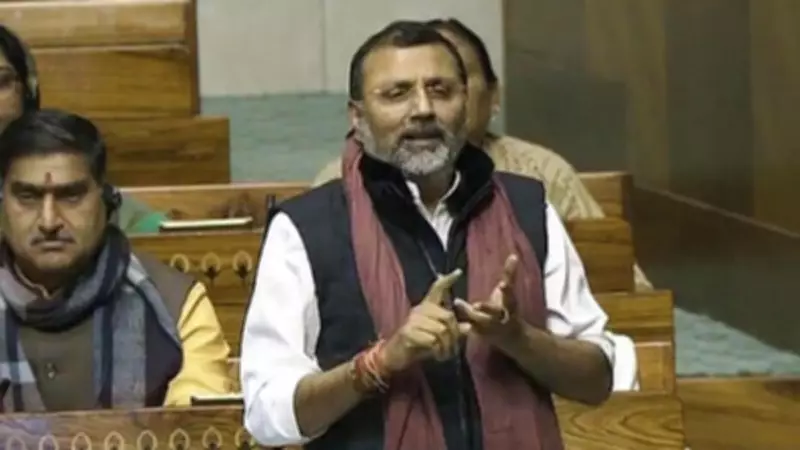
BJP MP Nishikant Dubey Demands Cancellation of Rahul Gandhi's Lok Sabha Membership
In a dramatic escalation of political tensions, Bharatiya Janata Party (BJP) Member of Parliament Nishikant Dubey has formally submitted a notice seeking the cancellation of Congress leader Rahul Gandhi's membership in the Lok Sabha. The move comes amid ongoing parliamentary clashes, with Dubey accusing Gandhi of conduct unbecoming of a parliamentarian.
'Urban Naxal' Allegation Sparks Controversy
Dubey's notice, submitted on February 12, 2026, contains explosive allegations against the Leader of Opposition. He stated that Rahul Gandhi's membership should be annulled and that he should not be permitted to serve as a member of the house at all. The BJP MP went further, characterizing Gandhi's behavior as akin to that of an 'urban naxal', a term often used in political discourse to describe individuals allegedly supporting left-wing extremist ideologies while operating in urban settings.
This accusation has ignited a fresh wave of controversy in Indian politics, with implications for parliamentary decorum and democratic norms. Dubey's action represents a significant attempt to challenge the legitimacy of a key opposition figure through formal parliamentary procedures.

Formal Notice Submitted Amidst Political Strife
The notice was officially submitted and recorded, marking a procedural step that could potentially lead to a review of Gandhi's parliamentary status. Dubey emphasized that his demand is based on what he perceives as a pattern of behavior that undermines the institution of Parliament.
Key points from Dubey's submission include:
- A call for the immediate annulment of Rahul Gandhi's Lok Sabha membership.
- An assertion that Gandhi should be barred from parliamentary membership entirely.
- Allegations that the Congress leader's actions are inconsistent with the responsibilities of a Member of Parliament.
Broader Political Context and Reactions
This development occurs against a backdrop of intense political rivalry between the ruling BJP and the opposition Congress party. The use of the term 'urban naxal' is particularly charged, as it carries connotations of anti-national activities in contemporary political rhetoric.
Political analysts suggest that Dubey's move may be aimed at:
- Applying pressure on the opposition during parliamentary sessions.
- Shifting public discourse around parliamentary conduct.
- Testing procedural mechanisms for member disqualification.
The Congress party has yet to issue an official response to these specific allegations, but previous instances suggest they are likely to dismiss the notice as politically motivated. The episode highlights the deepening polarization in Indian politics, where procedural tools are increasingly deployed in partisan conflicts.
As the notice undergoes parliamentary processing, observers will be watching closely to see whether it gains traction within formal committees or remains a symbolic political gesture. The outcome could have significant implications for parliamentary ethics, opposition rights, and the tone of political debate in India.






