

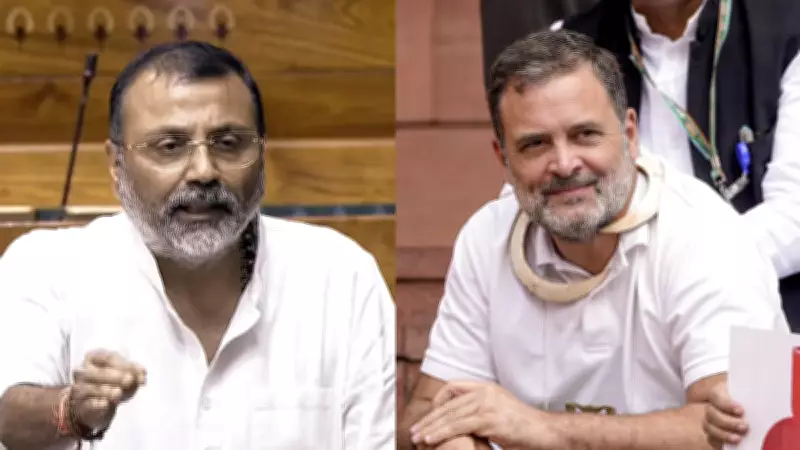
BJP MP Nishikant Dubey Makes Explosive Allegation Against Rahul Gandhi
In a statement that has ignited a political firestorm, Bharatiya Janata Party (BJP) Member of Parliament Nishikant Dubey has accused Congress leader Rahul Gandhi of harboring desires for foreign aggression against India. Dubey claimed that Gandhi would find peace if nations like China, the United States, and Russia were to launch an attack on the country.
Controversial Remarks Stir National Security Debate
The allegation was made during a recent political discourse, where Dubey suggested that Gandhi's stance on various issues indicates a lack of commitment to India's sovereignty. According to Dubey, this purported mindset reflects a deep-seated wish for external forces to destabilize the nation, thereby bringing Gandhi personal solace.
This remark has quickly escalated into a heated exchange between the BJP and the Congress party, with both sides trading barbs over patriotism and national loyalty. The Congress has vehemently denied the accusation, labeling it as baseless and politically motivated.

Political Reactions and Implications
In response, Congress spokespersons have condemned Dubey's statement as a desperate attempt to divert attention from pressing domestic issues. They argue that such inflammatory rhetoric undermines national unity and distracts from substantive policy discussions.
The BJP, however, has stood by Dubey's comments, asserting that they highlight genuine concerns about the opposition's approach to national security. This incident underscores the increasingly polarized nature of Indian politics, where allegations of anti-national sentiment are frequently weaponized for political gain.
Key points from the controversy include:
- Dubey's specific mention of China, the US, and Russia as potential aggressors.
- The Congress's swift denial and counter-accusations of BJP misdirection.
- The broader impact on public discourse regarding India's foreign relations and internal security.
Analysis of the Allegation's Context
This episode occurs against a backdrop of ongoing tensions between India and neighboring China, as well as complex diplomatic engagements with global powers like the US and Russia. Dubey's choice of these three countries in his allegation is seen as a strategic move to tap into existing geopolitical anxieties.
Experts note that such statements often serve to rally nationalist sentiments and consolidate voter bases, particularly in the lead-up to elections. The controversy has sparked debates on social media and in political circles, with many calling for a more responsible discourse that prioritizes factual accuracy over sensationalism.
As the situation unfolds, it remains to be seen how this allegation will influence upcoming political campaigns and public opinion. Both parties are likely to leverage this issue to underscore their respective commitments to national security and governance.






