

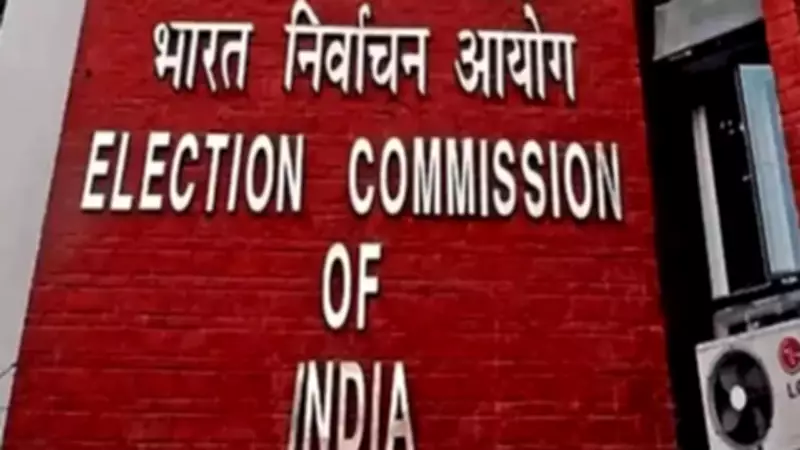
Election Commission Extends Deployment of Central Forces in West Bengal to Curb Post-Poll Violence
The Election Commission of India announced on Friday that it will retain 500 companies of central armed police forces (CAPFs) in West Bengal for law and order duties after the election results are declared. This deployment will continue "till further orders of the Election Commission," according to an official statement.
Massive Security Presence During and After Elections
Each CAPF company comprises 80-100 personnel, meaning approximately 40,000-50,000 central force members will remain stationed in the state following the electoral process. A total of 2,400 CAPF companies were initially assigned for poll deployment in Bengal, with 1,700 scheduled to leave after polling concludes on April 29.
EC officials clarified that besides the 500 companies staying back for long-term law and order maintenance, another 200 companies will be retained "till counting is completed" to secure EVM strong-rooms and counting centers.

Preventive Measure Against Historical Violence Patterns
Sources within the Election Commission revealed that the decision to extend the stay of 500 CAPF companies was made in view of West Bengal's documented history of post-poll violence. This concern is substantiated by an NHRC probe into violence following the 2021 assembly elections.
The NHRC investigation found that between May 2, 2021 and June 20, 2021, the state Director General of Police reported 1,970 complaints of violence. These included:
- 29 complaints related to murder
- 12 involving sexual assault
- 391 cases of grievous hurt
- 940 incidents of arson and vandalism
- 562 instances of criminal intimidation
Alarmingly, only 1,168 of these complaints were converted into FIRs, with just 1,345 arrests made from a total of 9,304 accused individuals. The NHRC's own spot inquiries at 311 locations revealed that FIRs were not registered in 60% of the places where violence occurred.
NHRC Findings on Organized Violence
The NHRC observed that "the spatio-temporal expanse of violent incidents... with little efforts of state to prevent or control or rectify the same is actually a larger picture of organized violence by supporters of the ruling party in retribution against persons who dared to support the other major party which lost the recent (2021) assembly elections."
An Election Commission official noted that while polls in Bengal will be completed on May 6, any post-poll violence has a direct correlation with elections, making the commission a stakeholder in maintaining order even after results are declared.
Administrative Oversight and Corrective Actions
In a related development on Thursday, the Election Commission took serious note of the West Bengal government's deployment of 2,185 police personnel prior to the announcement of polls for "providing security to 832 TMC personnel and 144 others, including TMC supporters."
The commission ordered the DGP to conduct a strict professional review within two to three days, redistributing security personnel across functionaries and supporters of all political parties in an equitable manner.
Additionally, the EC suspended and ordered action against the joint BDO and assistant RO of Khandaghosh assembly constituency "for openly canvassing for TMC."
Broader Context of Administrative Transfers
An EC source revealed that the West Bengal government had resorted to large-scale transfers ahead of the start of the Special Investigation Report (SIR) in the state on October 27, 2025. These transfers shifted out 1,370 officers, including:
- 97 from the Indian Administrative Service (IAS)
- 146 from the Indian Police Service (IPS)
- 1,080 from the West Bengal Civil Service
- 47 from the West Bengal Police
Even after the winning party forms the government in Bengal, it may need to write to the Election Commission or Union Home Ministry to withdraw the central forces. The latter may turn to the EC for clearance, given that the post-poll deployment is specifically "till further orders of the Election Commission."

On Friday, Chief Election Commissioner Gyanesh Kumar directed the state chief secretary, DGP, and senior state administration and police officials to ensure elections where citizens can vote without fear and which are free of violence, intimidation, inducement, voter impersonation (chaapa), booth jamming, and source jamming.





