

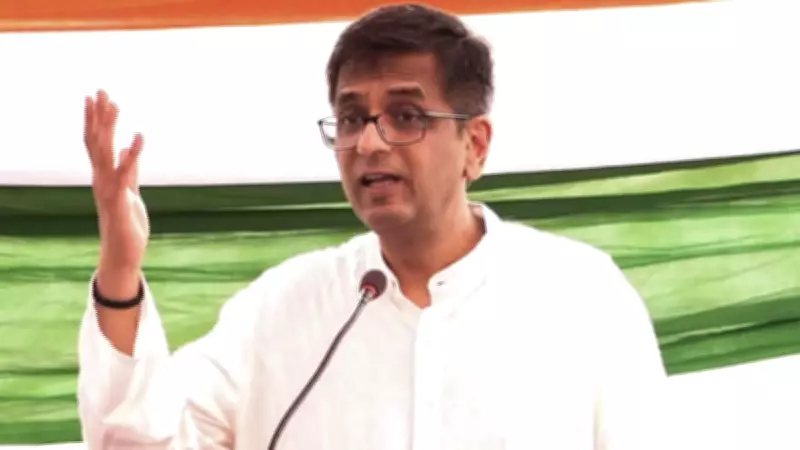
Former Chief Justice D Y Chandrachud Applauds Scholarly Work for Debunking Colonial 'Political Mythology'
In a significant intellectual intervention, former Chief Justice of India D Y Chandrachud has publicly praised a recent book for its rigorous dismantling of what he termed the 'political mythology' surrounding colonial benevolence. His remarks, made in early February 2026, have sparked renewed discourse on historical narratives and their contemporary implications.
Chandrachud's Critique of Colonial Portrayal
Justice Chandrachud articulated that colonial rule has often been depicted through a distorted lens, characterized by three key misleading elements:
- Necessity: The idea that colonial intervention was unavoidable or required for stability.
- Reluctance: The portrayal of colonizers as hesitant or unwilling participants.
- Civilizing Mission: The notion that colonialism aimed to uplift and educate native populations.
He emphasized that this narrative obscures the true nature of colonialism as a deliberate and systematic project of expansion and economic exploitation. By framing it in these terms, historical accounts have often sanitized the harsh realities of subjugation and resource extraction that defined the era.

The Book's Role in Historical Reassessment
The book, which Justice Chandrachud highlighted but did not name in initial reports, serves as a critical academic resource that challenges these long-held perceptions. It meticulously analyzes primary sources and historical records to present a more accurate and unvarnished view of colonial activities.
This scholarly work contributes to a growing body of literature that seeks to correct historical inaccuracies and promote a deeper understanding of India's colonial past. By exposing the myths of benevolence, it encourages readers to reconsider the motivations and impacts of colonial powers, moving beyond simplistic or apologetic interpretations.
Implications for Contemporary Discourse
Justice Chandrachud's endorsement carries weight given his esteemed position in India's judicial and intellectual circles. His comments underscore the importance of critical historical inquiry in shaping national identity and policy. In an era where historical narratives are often politicized, his advocacy for a fact-based reassessment resonates with broader efforts to decolonize education and public memory.
The timing of this statement, in early 2026, aligns with ongoing debates about historical representation in curricula and public monuments. It highlights how scholarly insights can inform public consciousness and foster a more nuanced appreciation of complex historical events.
Ultimately, this episode reinforces the vital role that academic research and informed commentary play in challenging entrenched myths and fostering a more truthful engagement with history. Justice Chandrachud's praise for the book not only validates its scholarly contributions but also calls for a continued reexamination of the narratives that shape our understanding of the past.






