

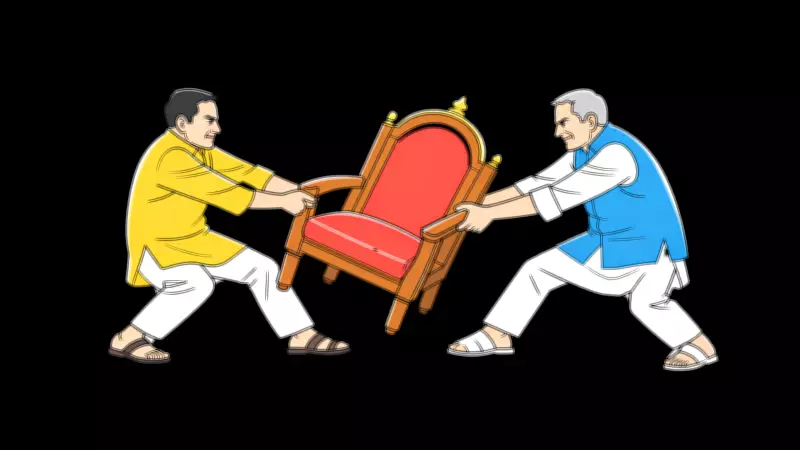
What is the Fair Number of Seats a State Should Get in India?
The allocation of seats for states in India's Parliament is a critical and often contentious issue that lies at the heart of democratic representation. This debate revolves around determining a fair number of seats each state should receive in the Lok Sabha, the lower house of Parliament, to ensure equitable political voice and influence across the diverse nation.
Historical Context and Current Framework
India's current seat allocation is based on the 1971 Census, as per a constitutional amendment that froze the number of Lok Sabha seats until 2026. This freeze was implemented to encourage population control measures by not penalizing states with lower population growth rates. As a result, states like Uttar Pradesh and Bihar, with rapidly growing populations, are underrepresented compared to their demographic weight, while southern states with stabilized populations have relatively higher representation per capita.
The Constitution of India outlines the principles for seat distribution, primarily based on population size, but also considers factors like geographical area and administrative convenience. However, the freeze has led to significant disparities, sparking ongoing discussions about fairness and the need for reform.

Key Factors in Determining Fair Seat Allocation
Several factors are considered when debating fair seat allocation for states:
- Population Size: The primary criterion, as per the Constitution, is population, with seats allocated proportionally to ensure each citizen's vote carries equal weight.
- Geographical Area: Larger states may require more seats to adequately represent vast and diverse regions, though this is secondary to population.
- Administrative and Historical Considerations: Some adjustments are made for union territories and special category states to maintain political balance.
- Demographic Changes: Post-2026, when the freeze lifts, population data from newer censuses will likely reshape seat distribution, potentially shifting power dynamics.
Challenges and Controversies
The debate over fair seat allocation is fraught with challenges. States with high population growth argue they are unfairly underrepresented, affecting their political clout in national decision-making. Conversely, states with controlled population growth fear losing seats and influence if allocation is solely based on updated census data. This tension highlights the delicate balance between rewarding demographic management and ensuring proportional representation.
Moreover, issues like migration, urbanization, and the representation of marginalized communities add layers of complexity. For instance, urban areas with dense populations might be underrepresented compared to rural regions, raising questions about the accuracy of current delimitation exercises.
Proposed Reforms and Future Outlook
Various proposals have been suggested to address these imbalances. Some experts advocate for a hybrid model that combines population with other factors like economic contribution or development indicators. Others call for increasing the total number of Lok Sabha seats to accommodate growth without reducing representation for any state.
The impending delimitation exercise post-2026 is expected to be a pivotal moment, potentially redistributing seats based on the latest census data. This process will require careful negotiation to maintain national unity and fairness, possibly involving constitutional amendments or new legislative frameworks.
In conclusion, determining the fair number of seats for Indian states is a multifaceted issue that impacts democratic equity and federal harmony. As India evolves, finding a balanced solution that respects both demographic realities and historical contexts will be crucial for sustaining its vibrant democracy.






