Congress Kisan Maha Chaupal Highlights Farmers' Plight Amid Political Fanfare
In Bhopal, the Congress party's Kisan Maha Chaupal at Jawahar Chowk on Tuesday was marked by loud slogans and blaring loudspeakers, yet the most poignant narratives emerged from quiet, hushed conversations among farmers, workers, and laborers. These individuals, who sustain urban life daily, shared stories of deep-seated challenges that often go unheard in the clamor of political events.
Personal Stories of Struggle and Survival
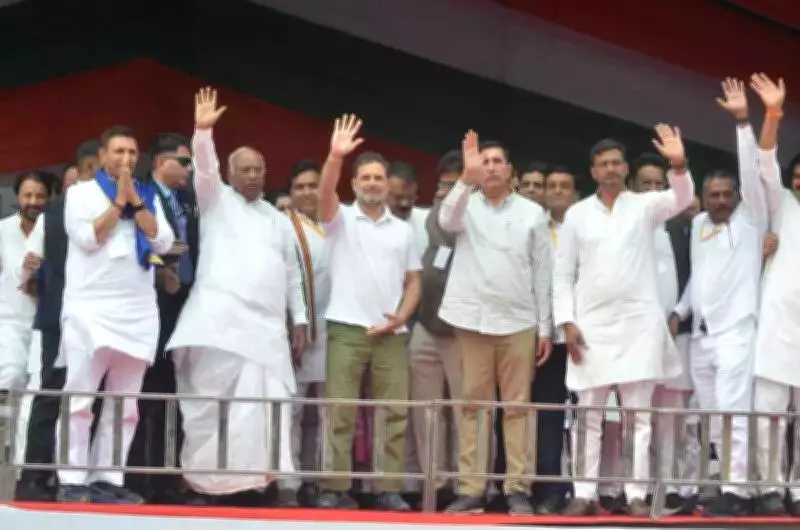
Among the attendees, an elderly woman traveled from a nearby village not only to learn about the India-US trade deal but also to express her desperate need for a pension to survive. Similarly, a single mother faced eviction from her modest home due to redevelopment under a smart city project, highlighting the human cost of urban progress. These women joined thousands at the event, headlined by Congress leaders Rahul Gandhi and Mallikarjun Kharge, hoping to make their voices heard by those in authority.
Along the footpath, near a small table with drinking water, farmers gathered in small circles, discussing land, prices, and survival. Their conversations were shaped less by political ideology and more by the everyday uncertainties of agricultural life. Seventy-year-old GL Gour from Koudiya village in Phanda tehsil stood patiently, reflecting on the past to understand the present. "Back when HD Deve Gowda was prime minister, I sold soybean at Rs 8,000 per quintal. Now it's below Rs 4,000," he stated matter-of-factly. With 20 acres of land and a family of ten dependent on farming, Gour, an educated farmer who passed higher secondary in 1968, attended independently, driven by belief in collective action.

Land Insecurity and Long Journeys for Hope
Nearby, 75-year-old Chain Singh Patel from Biccholi village in Sehore district spoke of a different insecurity: his village lies in a forest area, and land ownership remains a distant dream despite generations of cultivation. "My grandfather was born there. We have been cultivating this land for generations, but we still don't have patta," he lamented. When asked why he came to Bhopal, Patel paused before replying with a voice lacking conviction, "I hope something will happen."
Not all journeys were short. Acche Lal Saket, 60, traveled over 500 km from Naigarhi in Rewa district, spending the night in a general-class train compartment with friends. "I have only five acres. Earlier, it was enough to raise my family. Now, things are getting more difficult day by day," he said, adding that he came in hope of betterment. For 28-year-old Bhola Singh Lodhi, a small tribal farmer from Bargi in Jabalpur, expectations were simpler: "We should get better prices for our crops."
Farmers Seek Solutions and Compensation
Arun Patel and Sewak Ram Patel, soybean farmers from nearby districts, sat in the front row, listening cautiously to every speech. They brought a memorandum to share with Congress leaders about challenges in receiving compensation for rain-damaged crops and to understand the impact of the India-US trade deal. "We have come with a memorandum that we want to share with the Congress leaders about our challenges in getting compensation when crops are damaged due to rain. We also want to hear about what this trade deal is about and how it will impact us," Patel explained.
As the rally concluded, many farmers lingered, folding banners carefully or sitting quietly on the pavement. They did not speak of victories or assurances—only of hope, underscoring the enduring struggles in India's agricultural sector.