

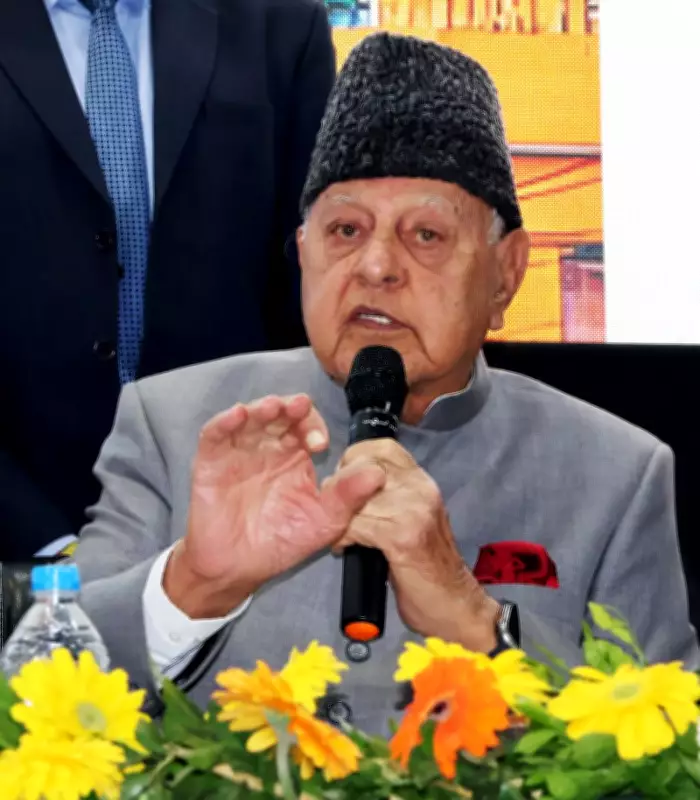
Farooq Abdullah Stresses India's Sovereignty in Oil Purchases Amid US Waiver Debate
National Conference president Farooq Abdullah has made a strong statement regarding India's energy policy, asserting that no external power, including the United States, should dictate the country's decisions on purchasing Russian oil. This comes in response to discussions about a potential US waiver that might allow India to continue buying oil from Russia despite international sanctions.
Abdullah's Firm Stand on National Autonomy
In a recent address, Abdullah emphasized that India is a sovereign nation capable of making its own choices based on national interests. He argued that while the US waiver might be seen as a gesture of flexibility, it should not be interpreted as permission or a mandate for India's actions. "Nobody should decide for India," Abdullah declared, highlighting the importance of self-determination in foreign policy and economic matters.
He pointed out that India has historically maintained an independent stance in global affairs, and this should extend to energy procurement. The leader from Jammu and Kashmir stressed that decisions regarding oil imports must prioritize India's economic stability and energy security, rather than being swayed by external pressures or waivers.

Context of US Waiver and Global Dynamics
The backdrop to Abdullah's comments involves ongoing geopolitical tensions, where the US has imposed sanctions on Russia following its actions in Ukraine. India, as a major oil consumer, has sought to diversify its energy sources, including imports from Russia, to mitigate price volatility and ensure supply continuity. A US waiver could potentially ease restrictions, but Abdullah's stance underscores a broader principle of non-interference.
He noted that India's relationship with both the US and Russia is complex and multifaceted, requiring careful balancing. "We must navigate these relationships on our own terms," Abdullah added, suggesting that reliance on waivers could undermine India's strategic autonomy. This perspective aligns with calls from various political quarters for a more assertive foreign policy that safeguards national interests.
Implications for India's Energy Strategy
Abdullah's remarks have sparked discussions on how India should approach its energy strategy in a polarized world. Key points include:
- Energy Security: Ensuring stable and affordable oil supplies is crucial for India's growing economy, and diversifying sources like Russian oil can help achieve this.
- Diplomatic Independence: Maintaining sovereignty in decision-making prevents external actors from influencing domestic policies.
- Global Partnerships: Balancing ties with major powers like the US and Russia requires nuanced diplomacy without compromising core principles.
Experts suggest that while waivers might offer short-term relief, long-term energy resilience depends on developing domestic alternatives and strengthening international collaborations on equal footing. Abdullah's intervention highlights the need for a cohesive national consensus on such critical issues.
Political Reactions and Future Outlook
Responses to Abdullah's statement have been mixed, with some praising his defense of sovereignty and others cautioning against isolating India from global alliances. As debates continue, the focus remains on how India will chart its course in energy procurement amid evolving international norms.
In conclusion, Farooq Abdullah's firm position serves as a reminder of the importance of self-reliance and strategic autonomy in India's policy framework. As the country navigates complex global dynamics, his words underscore the principle that external waivers should not dictate internal decisions, reinforcing India's commitment to independent action in the pursuit of national interests.






