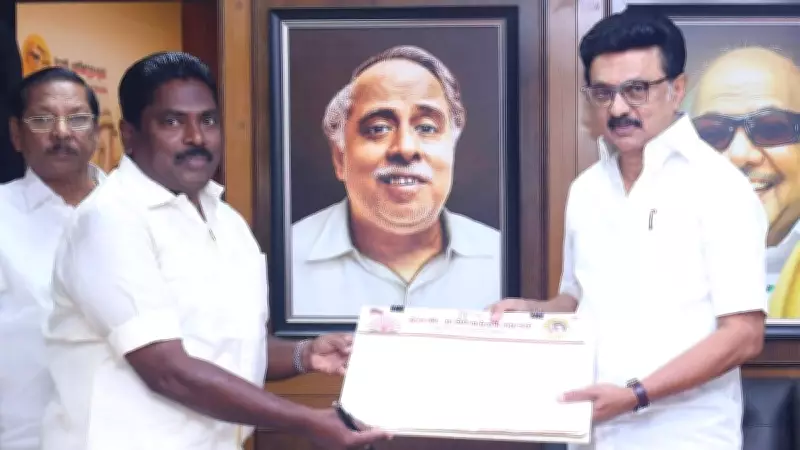
Former AIADMK minister P Benjamin, along with his supporters, officially joined the DMK on Thursday, in a move that underscores the ongoing exodus of prominent leaders from the principal opposition party in Tamil Nadu. The switch was formalized at a function held in Chennai, where DMK president and Chief Minister M K Stalin welcomed Benjamin and his followers into the party fold.
Benjamin's Political Journey
P Benjamin, a seasoned politician who served as a minister in the previous AIADMK government, had been a key figure in the party's minority welfare and fisheries departments. His departure from the AIADMK is seen as a significant blow to the party, which has been grappling with a series of high-profile exits since its electoral defeat in the 2026 assembly elections. Benjamin's decision to join the DMK was widely anticipated after he expressed dissatisfaction with the AIADMK's internal functioning and leadership.
Reasons for the Switch
Speaking at the joining event, Benjamin cited the DMK's inclusive policies and development-oriented governance as the primary reasons for his move. He praised Chief Minister Stalin's leadership and the party's commitment to social justice and minority welfare. Benjamin also criticized the AIADMK's current leadership, accusing it of neglecting grassroots workers and failing to provide a strong opposition. His supporters, including several local party functionaries, echoed similar sentiments.

Impact on AIADMK
Benjamin's exit is the latest in a string of departures from the AIADMK, which has seen several former ministers, MLAs, and senior leaders leave the party in recent months. Political analysts suggest that the AIADMK's weakened position after the 2026 elections, coupled with internal factionalism, has accelerated the exodus. The party is now scrambling to retain its remaining cadre and rebuild its organizational structure ahead of future electoral battles.
DMK's Strategy
The DMK, on the other hand, has been actively consolidating its position by welcoming leaders from rival parties. The inclusion of Benjamin is expected to strengthen the DMK's outreach among minority communities and in regions where Benjamin holds influence. Party insiders indicate that more crossovers may be in the offing as the DMK aims to expand its base and weaken the AIADMK further.
Benjamin's joining also sends a signal of the DMK's growing dominance in Tamil Nadu politics, with the ruling party now commanding a broad coalition of allies and former opponents. The development comes ahead of local body elections, where the DMK is keen to project unity and strength.
As the political landscape in Tamil Nadu continues to shift, the AIADMK faces the daunting task of arresting the outflow of leaders and re-establishing itself as a credible alternative. For now, Benjamin's move to the DMK adds another chapter to the state's fluid political narrative.