Congress President Kharge Revives Gandhi's Gram Swaraj Debate Amid MGNREGS Renaming Controversy
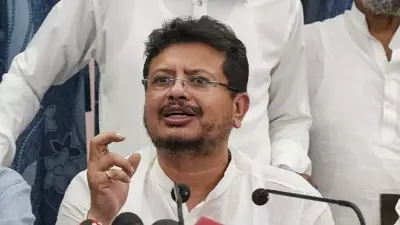
Congress President Mallikarjun Kharge has reignited discussions about Mahatma Gandhi's vision of Gram Swaraj (village self-rule) while criticizing the Union government's decision to rename the Mahatma Gandhi National Rural Employment Guarantee Scheme (MGNREGS). Speaking ahead of Parliament's Budget session, Kharge accused the government of attempting to "remove Mahatma Gandhi's name from public memory" and weaken the concept of village self-reliance through the scheme's rebranding as VB-G RAM G (The Viksit Bharat — Guarantee for Rozgar and Ajeevika Mission-Gramin).
The Historical Context of MGNREGS and Gandhi's Connection
Introduced in 2005 under the Manmohan Singh-led UPA government and implemented from February 2006, MGNREGS was designed to address rural distress, particularly farmer suicides, by legally guaranteeing 100 days of employment per household annually through public works like road and well construction. The "Mahatma Gandhi" prefix was added on October 2, 2009, aligning the scheme with Gandhi's rural development philosophy. In December last year, the government introduced a bill to repeal MGNREGA, replacing it with VB-G RAM G, which includes extended employment durations and altered state funding shares—a move that has drawn criticism from opposition parties.
Understanding Gandhi's Gram Swaraj: A Vision of Self-Sufficient Villages
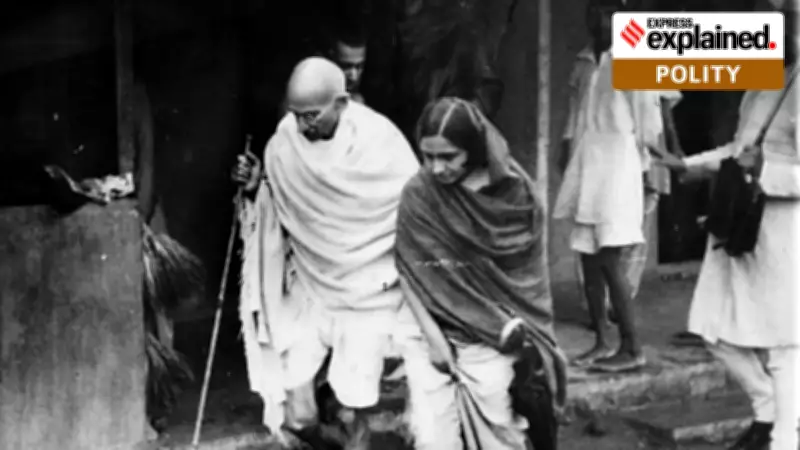
Across his writings, Gandhi envisioned villages as complete republics, independent for basic needs yet interdependent for others. He emphasized:

- Growing food crops and cotton locally
- Eliminating caste-based discrimination
- Implementing non-violence through Satyagraha
- Establishing panchayats elected by adult villagers
In a 1946 writing, Gandhi criticized urban growth as "an evil thing", arguing that cities exploited villages. His philosophy was put into practice through movements like the Champaran satyagraha (1917) and the establishment of self-sufficient ashrams like Sevagram in Maharashtra.
Post-Independence Challenges: Why Gram Swaraj Remains Elusive
Despite Gandhi's vision, post-Independence policies initially focused on urban-centric development, widening the rural-urban gap and prompting migration to cities. While some rural initiatives were implemented—such as zamindari abolition (though limited to few states) and employment schemes like Jawahar Rojgar Yojana—significant hurdles persist:
- Infrastructure vs. Social Services: While roads and electricity have reached many villages, quality education and healthcare remain inadequate.
- Caste Divisions: Social hierarchies continue to hinder inclusive development.
- Limited Livelihood Opportunities: Rural entrepreneurship lacks sufficient policy support, forcing migration for better prospects.
- Democratic Decentralization Gaps: Despite the 73rd constitutional amendment granting constitutional status to panchayati raj institutions, genuine devolution of financial, political, and administrative power is often lacking.
Today, approximately 65% of Indians live in villages, down from 82% in 1960, reflecting ongoing urbanization pressures.
Contemporary Efforts and Persistent Shortcomings
Recent initiatives like Prime Minister Narendra Modi's Sansad Adarsh Gram Yojana (2014), which encouraged MPs to adopt and develop villages, have seen limited engagement from parliamentarians. The program's mixed results highlight broader challenges in translating policy into effective grassroots action. Achieving Gandhi's vision requires more than funding—it demands political will and systemic changes to empower local governance.
As Gandhi noted, "To model such a village may be the work of a lifetime." For India's 6.74 lakh villages, this observation remains profoundly relevant as the nation continues to grapple with balancing modernization and preserving the ideals of rural self-reliance.