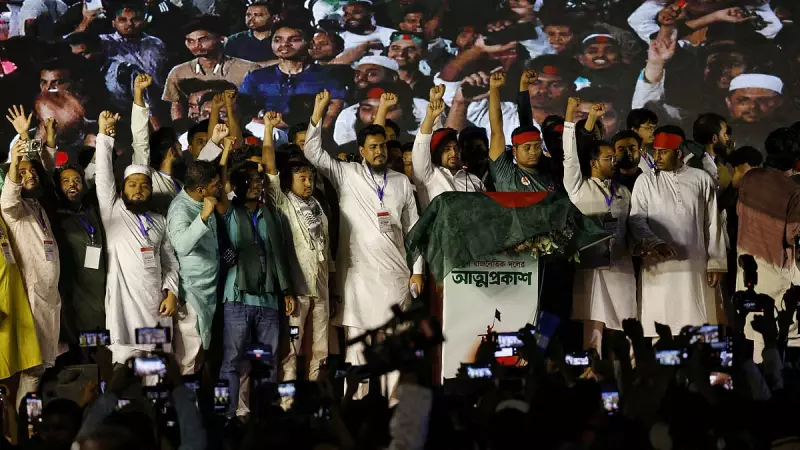
A prominent youth-centric political party in Bangladesh, Nagorik Oikya, is confronting a severe internal crisis that jeopardizes its very existence. The turmoil stems from a controversial decision by its top leadership to forge an electoral alliance with an Islamist party, a move that has triggered a fierce revolt from its core base of young, secular-minded activists.
The Alliance That Sparked the Fire
The crisis erupted after Nagorik Oikya's President, Mahmudur Rahman Manna, and Secretary General, Sultan Muhammad Mansur Ahmed, announced an electoral understanding with the Bangladesh Khelafat Andolon. This party is led by Moulana Syed Muhammad Zafrul Hasan, who is also the Khatib of the national Baitul Mukarram Mosque. The alliance was formalized ahead of the upcoming elections, a strategic move that backfired spectacularly.
Nagorik Oikya, founded in 2018, had carved a niche for itself as a platform for the country's youth, advocating for progressive and secular politics. Its sudden pivot towards an Islamist group, whose ideologies often clash with liberal values, was seen as a profound betrayal by its supporters. The backlash was swift and severe, unfolding primarily on social media platforms where the party's strength lies.

A Wave of Resignations and Public Outcry
The party's digital and social media wings, the backbone of its outreach, have been decimated by resignations. Mohammad Sajidul Haque, the influential head of the party's digital platform, stepped down in protest. His resignation letter, addressed to Secretary General Mansur, bluntly stated the alliance contradicted the party's foundational principles and the expectations of its youth supporters.
He was not alone. The convener of the social media team, Rasel Ahmed, also resigned, citing the impossibility of justifying this political shift to the party's online community. The resignations cascaded through the ranks, with numerous district-level organizers and volunteers publicly quitting and voicing their disillusionment. The revolt highlights a deep generational and ideological rift between the older leadership's political pragmatism and the younger base's commitment to principle.
Leadership's Defense and Mounting Pressure
Facing the firestorm, Secretary General Sultan Muhammad Mansur Ahmed attempted to defend the decision. He argued that the alliance with Khelafat Andolon was a tactical necessity for electoral survival and did not mean an endorsement of all their views. He pointed out that the Islamist party had a significant organizational network that could be leveraged.
However, this justification failed to placate the angry youth wing. Critics accused the leadership of sacrificing the party's soul for a chance at political relevance, warning that this move would alienate its core constituency permanently. The pressure is now immense on President Mahmudur Rahman Manna, who must navigate this rebellion to prevent Nagorik Oikya from disintegrating just years after its formation.
The Future Hangs in the Balance
The ongoing revolt poses an existential threat to Nagorik Oikya. If the leadership does not reconsider the alliance or fails to convincingly reconcile with its base, the party risks collapsing from within. The incident serves as a stark case study in the challenges new political faces encounter in Bangladesh's complex political landscape, where ideological purity often clashes with the harsh realities of coalition building.
More broadly, it underscores the potent force of Bangladesh's Gen Z and millennial voters, who are increasingly vocal in holding political parties accountable. Their reaction demonstrates a low tolerance for what they perceive as ideological hypocrisy, especially on issues of secularism and progressive values. The party's ability to survive this self-inflicted crisis will depend entirely on whether it can rebuild the shattered trust of the very generation it sought to represent.