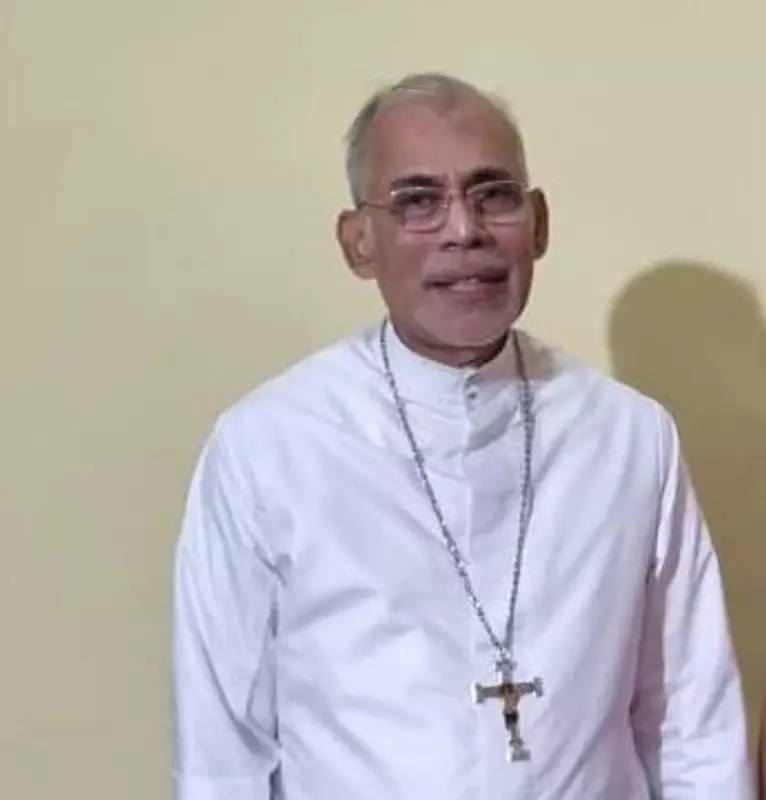
In a powerful and somber New Year's address, the Archbishop of Goa and Daman, Filipe Neri Ferrao, has voiced profound concerns over the deteriorating climate of religious tolerance in India. His pastoral letter, marking the beginning of 2025, strikes a markedly different note from celebratory messages, focusing instead on the persecution faced by minority communities across the nation.
A Pastoral Letter of Concern, Not Celebration
Archbishop Ferrao, who leads the prominent Roman Catholic archdiocese in Goa, chose the occasion of the New Year to deliver a message of serious introspection. He pointedly observed that the constitutional promise of a secular, democratic, and egalitarian India appears to be under significant strain. The Archbishop's letter suggests that the new year should not merely be a time for festivity but for collective reflection on the nation's moral and social fabric.
He explicitly stated that the country's minority communities are experiencing a growing sense of fear and insecurity. This sentiment, according to the Archbishop, stems from a rising tide of majoritarianism that threatens the pluralistic ethos upon which modern India was founded. His message implies that the ideals of justice, liberty, equality, and fraternity enshrined in the Constitution's preamble are being challenged by divisive forces.

Specific Grievances and a Call for Unity
The pastoral note did not limit itself to generalities. Archbishop Ferrao highlighted specific issues contributing to the atmosphere of persecution. He expressed deep worry over what he described as the "systematic targeting" of institutions and individuals belonging to minority groups. This, he argued, creates an environment where these communities feel marginalized and vulnerable.
Furthermore, the Archbishop's message touched upon the sensitive issue of religious conversions. He defended the right to profess and propagate one's faith, a right guaranteed by the Indian Constitution, while condemning any form of forced conversion. His call was for a society where diverse faiths can coexist peacefully and where dialogue triumphs over discord.
Broader Implications and the Path Forward
The significance of this message extends beyond the Christian community in Goa. As a senior religious figure in a state with a rich history of cultural and religious synthesis, Archbishop Ferrao's words carry considerable weight. They echo the anxieties expressed by other civil society groups and opposition parties regarding the state of religious freedom and communal harmony in contemporary India.
The letter serves as a stark reminder of the ongoing debates about national identity and citizenship. It challenges political and social leaders to reaffirm their commitment to India's secular principles. Archbishop Ferrao concluded his message with a call to action, urging all citizens, especially the faithful, to become beacons of hope and agents of positive change. He emphasized the need to protect the dignity of every human being and to work tirelessly towards building a more inclusive and compassionate society in the year 2025 and beyond.
The Archbishop's New Year note has undoubtedly sparked conversations, positioning itself as a crucial intervention in India's ongoing discourse on secularism, minority rights, and the future of its democratic values.