

Parliamentary Debate Erupts Over No-Confidence Motion Procedures
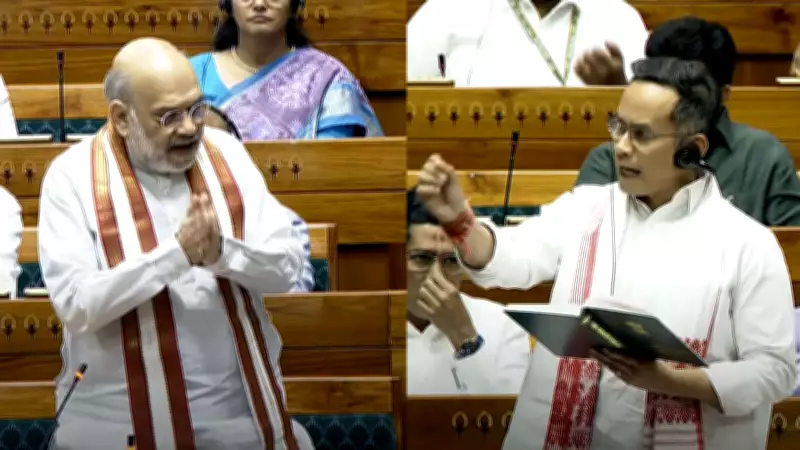
The Lok Sabha witnessed a sharp political confrontation during the debate on the no-confidence motion against Speaker Om Birla. Congress MP Gaurav Gogoi initiated the clash by questioning the constitutional legitimacy of the proceedings, while Union Home Minister Amit Shah mounted a robust defense of parliamentary institutions.
Gogoi Raises Constitutional Concerns Over Chair Appointment
Gaurav Gogoi emphasized that the Opposition's motion was fundamentally about protecting parliamentary dignity rather than targeting Birla personally. The Congress MP raised significant questions about the appointment of BJP MP Jagdambika Pal to preside over the debate, noting there was no clear explanation provided for how this decision was reached.
"If the Speaker cannot preside during such a motion, then the authority to appoint someone else should also be thoroughly examined," Gogoi argued during his intervention. He pressed for greater transparency in parliamentary procedures, suggesting that the constitutional basis for such appointments needed clearer definition and explanation.

Shah's Forceful Defense of Speaker's Authority
Responding with equal vigor, Union Home Minister Amit Shah delivered a comprehensive defense of the Speaker's institutional powers. Shah asserted that the Speaker's authority remains intact even during election periods or after the dissolution of the House, emphasizing the continuity of parliamentary institutions regardless of political circumstances.
The Home Minister's remarks highlighted the government's position that parliamentary procedures must respect established institutional frameworks. "The Speaker's institutional authority continues even during elections or after the dissolution of the House," Shah stated firmly, countering the Opposition's procedural challenges.
Constitutional and Political Dimensions of the Clash
The exchange transformed what began as a procedural debate into a significant constitutional and political contest within Parliament. Several key dimensions emerged from the confrontation:
- Procedural Transparency: Questions about how presiding officers are appointed during sensitive debates
- Institutional Continuity: Debate over whether the Speaker's authority extends beyond regular parliamentary sessions
- Parliamentary Dignity: Differing interpretations of what constitutes protection of parliamentary institutions
- Political Positioning: Both sides using constitutional arguments to advance their political narratives
The debate highlighted ongoing tensions between the ruling party and opposition regarding parliamentary procedures and institutional authority. As both sides presented their constitutional interpretations, the Lok Sabha became a battleground for competing visions of how parliamentary democracy should function during contentious political moments.
This parliamentary clash comes at a time when institutional procedures and their political implications are receiving increased scrutiny. The no-confidence motion debate has thus become more than just a vote on the Speaker's position—it has evolved into a broader discussion about parliamentary norms, constitutional interpretation, and the balance of power within India's democratic institutions.






