

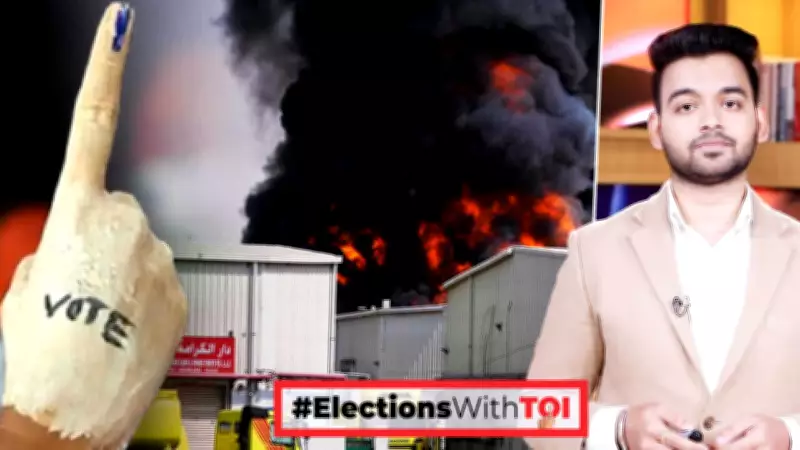
Global Gulf Crisis Casts Shadow Over Kerala's 2026 Assembly Elections
The 2026 Kerala Assembly elections are facing unprecedented disruption from international events, with tensions involving Iran and broader West Asia conflicts directly impacting voter participation. This geopolitical turmoil has created significant travel obstacles for Non-Resident Keralites (NRKs) who traditionally play a crucial role in the state's electoral outcomes.
Travel Disruption Leaves Thousands Stranded
Conflict escalation in the Gulf region has led to widespread flight cancellations and severe airfare spikes between Gulf countries and Kerala. This transportation crisis has left thousands of NRKs unable to return to their home state to cast their votes in person. The timing coincides perfectly with the election period, creating what political analysts describe as a perfect storm for voter disenfranchisement.
Malabar constituencies with substantial NRK populations are particularly vulnerable, as these regions often witness razor-thin victory margins where absentee votes can determine the final outcome. The inability of Gulf-based Keralites to participate physically has created uncertainty in what were already predicted to be closely contested battles.

Political Parties Adapt Campaign Strategies
Recognizing this challenge, political parties across the spectrum have intensified their local mobilization efforts while simultaneously ramping up online campaigning to reach voters who cannot return. The LDF, UDF, and BJP are all deploying digital strategies to connect with NRKs through virtual rallies, targeted social media campaigns, and direct communication channels.
Discussions around electoral reforms have gained renewed urgency, with calls for implementing e-voting mechanisms or alternative voting arrangements for overseas citizens. The current crisis has highlighted the vulnerability of Kerala's electoral process to international events and sparked debates about modernizing voting infrastructure.
Potential Reshaping of Kerala's Political Landscape
This situation represents a significant test for Kerala's democratic processes, with several potential outcomes:
- Reduced overall voter turnout in NRK-heavy constituencies
- Shift in campaign focus toward local issues rather than diaspora concerns
- Increased importance of proxy voting and family-based voting patterns
- Potential advantage for parties with stronger ground organizations
- Long-term pressure for electoral system reforms
The convergence of global conflict, travel disruption, and voter absence creates a complex scenario that could fundamentally alter election dynamics in Kerala. Political observers note that this may establish a precedent for how Indian states with large diaspora populations manage elections during international crises.
As the election approaches, all stakeholders are closely monitoring the situation, aware that the Gulf crisis has introduced an unpredictable variable into what was already anticipated to be a highly competitive electoral battle. The final impact on results will depend on both the duration of the travel disruptions and the effectiveness of alternative voting outreach efforts.






