HAL's Position in India's AMCA Program Faces Uncertainty Amid Private Sector Push
NEW DELHI: A critical question hangs over India's most ambitious defense aviation project: Is Hindustan Aeronautics Limited (HAL) being gradually sidelined from the Advanced Medium Combat Aircraft (AMCA) program? As this fifth-generation stealth fighter initiative enters a decisive development phase, growing speculation suggests India's indigenous combat aircraft might primarily be developed by private industry, potentially marking a historic shift away from HAL's long-standing monopoly in fighter manufacturing.
Recent reports indicating HAL might be "out of the race" for the AMCA's development phase have ignited intense debate across defense and strategic communities. The timing of these discussions gained particular urgency this month, coinciding with Aero India 2025 where fifth-generation fighters dominated conversations. This debate transcends technical specifications, evolving into a litmus test for New Delhi's evolving defense-industrial policy, the future role of public sector giants like HAL, and private industry's readiness to lead complex aerospace programs.
Reports of HAL's Potential Exclusion Spark Market Reaction
Earlier this month, multiple media reports suggested HAL might not participate in the AMCA development phase. The market responded swiftly, with HAL's share price dropping over 8% on the Bombay Stock Exchange following suggestions the state-owned defense company hadn't been shortlisted for developing and manufacturing next-generation fighters under the Advanced Multirole Combat Aircraft program.

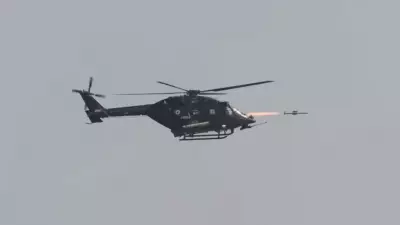
HAL currently maintains substantial commitments, including producing 180 Tejas Mk-1A fighters valued at approximately Rs 1.2 lakh crore, followed by 108 Tejas Mk-2 aircraft. The company simultaneously manages multiple helicopter and fixed-wing programs like the Indian Multi Role Helicopter (IMRH), Light Combat Helicopter (LCH), and Combat Air Teaming System (CATS).
Following a March 2025 contract, HAL is preparing to produce 156 additional LCHs for Indian military forces, with deliveries scheduled to commence in 2028. The company also recently signed contracts with Pawan Hans for supplying 10 Dhruv NG helicopters worth over Rs 1,800 crore. Some analysts suggest HAL's reported exclusion stems from policymakers' perceived need for parallel fighter assembly lines in India to prevent future Indian Air Force requirement bottlenecks.
HAL's Official Clarification and Strategic Positioning
On February 4, HAL issued a detailed clarification addressing circulating reports about its AMCA program status. "Various media reports regarding the Advanced Medium Combat Aircraft program have come to HAL's attention," the statement read. "HAL has not received any official communication in this regard and therefore is not in a position to comment on these reports at this stage. HAL is committed to keeping all stakeholders fully informed of all developments."
The public sector undertaking emphasized its financial and operational strength, stating: "HAL would like to reiterate that it has a robust confirmed order book, providing strong revenue visibility, and a healthy production and execution pipeline extending up to 2032." The company listed ongoing strategic programs including IMRH, LCA Mk2, and CATS, noting these initiatives "will further strengthen its technological capabilities and long-term growth prospects" with production expected post-2032.
HAL also highlighted diversification into civil aviation through platforms like Dhruv NG, Hindustan 228, and SJ 100, which "will enhance revenue and provide sustainable growth in the future." Separately, a senior HAL official indicated that even if excluded from initial AMCA development, this wouldn't constitute a major setback, as the company expects to bid for large-scale manufacturing orders approximately a decade later when the program reaches that phase.

The Strategic Imperative Behind AMCA Development
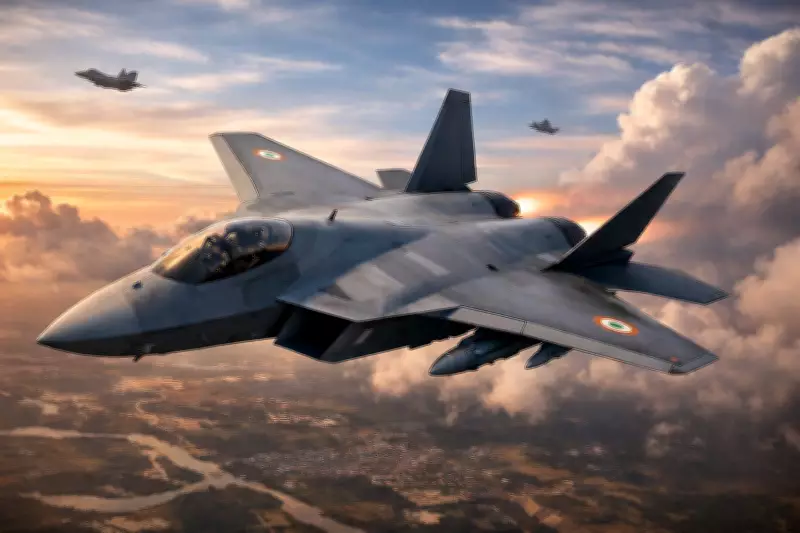
The AMCA represents India's strategic response to rapidly evolving regional air combat capabilities. Designed as a twin-engine, fifth-generation stealth fighter, the aircraft incorporates low-observable shaping, internal weapons bays, advanced sensor fusion, artificial intelligence-enabled decision support, and full network-centric warfare capability. It's engineered to operate deep within contested airspace while maintaining survivability against sophisticated air defense systems.
Two pressing strategic concerns drive this program. First, the Indian Air Force's squadron strength has diminished to approximately 30 squadrons against an authorized strength of 42.5, with at least eight additional squadrons scheduled for retirement within the next decade. Second, China has advanced significantly with operational fifth-generation fighters and has unveiled sixth-generation prototypes like the Chengdu J-36 and Shenyang J-50. Meanwhile, Pakistan progresses toward inducting at least 40 Chinese J-35A stealth fighters.
Against this backdrop, the AMCA transcends being merely another aircraft project. It's intended to form the backbone of India's air combat capability from the mid-2030s, with the Indian Air Force planning to induct seven squadrons totaling 126 aircraft during the initial phase.
Transitioning from HAL Monopoly to Competitive Execution Model
For decades, fighter aircraft production in India remained effectively HAL's exclusive domain. From MiG series aircraft to Su-30MKIs and indigenous Tejas fighters, HAL served as principal integrator and manufacturer. However, delays in the Tejas Mk-1A program combined with HAL's extensive existing commitments have prompted government reconsideration of this traditional model.
India has now finalized a new 'programme execution model' for AMCA development, approved by Defense Minister Rajnath Singh. This framework allows private firms to bid alongside HAL, aiming to accelerate prototype development and eventual induction by fostering a more competitive domestic aerospace ecosystem. Under this model, private companies can bid independently, form consortia, or partner with foreign original equipment manufacturers while complying with Indian laws and regulations.
"Private companies can also bid for the AMCA project independently, or in a joint venture with a foreign OEM, or as a consortium," an official explained. "It provides equal opportunities to both private and public sectors on a competitive basis. The bidder, of course, should be an Indian company compliant with domestic laws and regulations." The official emphasized this represents "an important step toward harnessing indigenous expertise, capability and capacity" and that selection "will not be handed over to HAL on a nomination basis."
Private Industry Contenders Enter the Aerospace Arena
This strategic shift has opened doors for private industry to assume central roles in India's most advanced fighter program. From seven consortia submitting bids for AMCA development, three have been shortlisted following rigorous assessment of technical expertise, manufacturing capability, development experience, financial strength, and existing order books.
The shortlisted contenders include:
- Tata Group
- Larsen & Toubro in partnership with BEL and Dynamatic Technologies
- Bharat Forge of the Kalyani Group collaborating with BEML and Data Patterns
Among these, Tata stands out as the only firm with experience establishing a final aircraft assembly line, achieved through its C-295 transport aircraft partnership with Airbus. Other firms contribute deep expertise in manufacturing components, wings, and fuselage sections, though none have previously led complete fighter assembly programs.
Other bidders not making the shortlist included Adani Defence & Aerospace with MTAR Technologies, Goodluck India Ltd with Axiscades Technologies Ltd, state-run BrahMos Aerospace Thiruvananthapuram Ltd, and another consortium involving ICOMM Tele Ltd. The final development partner selection is expected within three months, with the chosen entity collaborating closely with the Aeronautical Development Agency to build five AMCA prototypes by 2031 using the defense ministry's initial Rs 15,000 crore allocation.
Prototype Development and Future Induction Roadmap
The AMCA program received significant momentum last year when the Cabinet Committee on Security cleared full-scale engineering development of five prototypes alongside a structural test specimen, extensive flight testing, and certification at an initial cost exceeding Rs 15,000 crore.
According to existing timelines, initial AMCA squadrons will utilize American GE-F414 engines delivering 98 kilonewtons of thrust. Subsequent five squadrons will employ more powerful 110 kilonewton engines, with options under consideration from GE, France's Safran, and Britain's Rolls-Royce. HAL and General Electric are already engaged in techno-commercial negotiations for co-producing GE-F414 engines in India, featuring approximately 80% technology transfer for around $1.5 billion.
At Aero India 2025, ADA officials reassured stakeholders about program progress. "The detailed design has been completed," stated H Balaji, Deputy Project Director. "Material procurement and manufacturing planning activities have been initiated. Except for ejector seats and engines, all components are indigenous. We are working as per timelines and there is no question of delay in the project."
Tejas Program Delays Cast Shadow Over AMCA Discussions
The debate surrounding HAL's AMCA role cannot be separated from ongoing concerns regarding Tejas Mk-1A program delays. HAL has acknowledged LCA deliveries are behind schedule, primarily due to pending certifications and delayed engine supplies.
In early February, HAL confirmed five Tejas Mk-1A fighters are fully ready for delivery, incorporating "major contracted capabilities" per agreed specifications. Nine additional aircraft have been built and flown, awaiting engines from General Electric. "All design and development issues identified are being addressed in an expedited manner," a company statement noted, adding that HAL had received five engines from GE with "positive" supply positioning and expecting future deliveries to align with production schedules.
HAL Chairman and Managing Director DK Sunil previously commented: "This is the most important contract we have signed. Engines have the most lead time. Unlike previous instances where production halted between orders, and considering COVID disruptions, we initiated negotiations even before finalizing the 97 aircraft contract with IAF." He added: "Supply under the new contract for 113 engines is expected to begin by 2027 and end by 2032. We don't anticipate many delays."
Current Indian Air Force Combat Fleet Composition
Presently, the Indian Air Force operates no fifth-generation fighter aircraft. Its combat fleet combines imported and indigenous 4th- and 4.5-generation fighters. The force's backbone remains the Sukhoi-30MKI, handling air dominance and long-range strike roles, complemented by Dassault Rafale fighters equipped with advanced avionics, AESA radar, and network-centric warfare capabilities.
India's indigenous effort is represented by HAL Tejas aircraft, inducted to replace aging MiG-21 squadrons, while legacy platforms including MiG-29s, Mirage 2000s, and Jaguars continue serving after multiple upgrades. Collectively, these aircraft sustain India's air combat capability until next-generation platforms like AMCA enter service.